How Often Should You Bathe a Dog?
Most dogs need a bath every four to eight weeks, plus whenever they roll in something foul. Short-coated breeds can stretch to two or three months, oily or odor-prone coats may need monthly washing, and double-coated breeds need fewer baths but far more brushing. Overbathing strips the skin’s natural oils and causes more problems than dirt ever will.
Match the Schedule to the Coat
Coat type sets the calendar more than dirt does. Short, smooth coats like a Beagle‘s or Boxer‘s shed dirt on their own and manage fine with a bath every couple of months. Oily, water-resistant coats, think Labradors and hounds, develop that unmistakable dog smell faster and take a monthly wash gracefully. Double-coated northern and herding breeds like the Husky or German Shepherd flip the rule: bathe rarely, brush constantly, because their undercoat traps water and takes hours to dry properly, while brushing does most of the cleaning. Curly and continuously growing coats, Poodles and the doodle tribe, get bathed every four to six weeks anyway, since it fits the professional grooming cycle their coats already require. And hairless or allergy-prone dogs run on a vet’s schedule, sometimes weekly with medicated shampoo.
Why More Is Not Cleaner
Dog skin is not human skin: it is thinner, its pH is different, and it relies on a layer of natural oil for waterproofing and defense. Wash that layer away weekly with enthusiasm and human shampoo and you produce a dry, itchy, flaky dog whose skin overcompensates with more oil and more smell, which tempts you to bathe more, and around the cycle goes. Use an actual dog shampoo, rinse longer than feels necessary because residue itches, and dry double coats thoroughly down to the skin; a damp undercoat in a warm house is how hot spots start. Between baths, a rubber curry brush and a damp towel handle more grime than most people expect. If the dog smells bad within days of every bath, that is not a hygiene problem; ears, teeth, or skin infections are the usual culprits, and our ear care guide covers the most common one.
Make It Easy on Both of You
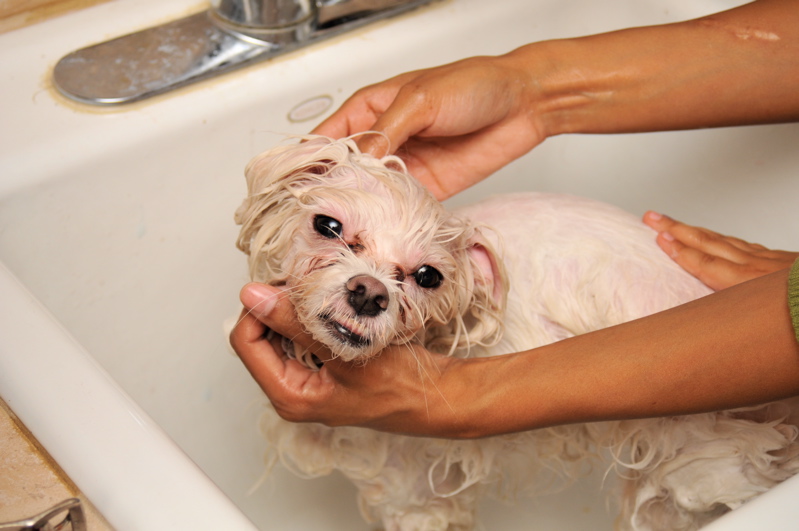
A dog that hates baths was usually taught to, one cold hose and one slippery tub at a time. Warm water, a non-slip mat, a lick mat smeared with peanut butter stuck to the tile, and a calm pace turn bath time from a wrestling match into a routine. Start young if you can; if you have adopted an adult with bath trauma, go slower than feels reasonable and let treats do the persuading. Rescue dogs often arrive never having had a pleasant bath in their lives, and the first time one leans into the warm water instead of away from it is a small, soapy victory worth the patience.