German Shepherd Dog Breed Guide
Ask a German Shepherd owner what the breed is like and you will hear the same word sooner or later: partnership. A Shepherd watches you the way other dogs watch squirrels. It learns your habits, your moods, and the sound of your car from three streets away, and it takes the job of being your dog more seriously than most humans take anything. That intensity is the whole bargain. Handled well, it produces the finest working companion in dogdom; ignored in a backyard, it curdles into barking, digging, and heartbreak.
| Size | Large |
|---|---|
| Weight | 50–90 lb |
| Lifespan | 9–13 years |
| AKC Group | Herding |
| Energy Level | High |
| Good with Kids | Yes (with training) |
| Shedding | Heavy |
| Trainability | Excellent |
Temperament & Personality
With family, a Shepherd is devoted to the point of comedy: it will escort you to the bathroom, supervise your gardening, and position itself where it can see every door in the house. With strangers, expect polite reserve rather than instant friendship. The breed was designed to make its own judgments, and it does, constantly. Early, generous socialization teaches a young Shepherd that new people and new places are ordinary rather than suspicious, and it is the single most important investment you will make in this dog.
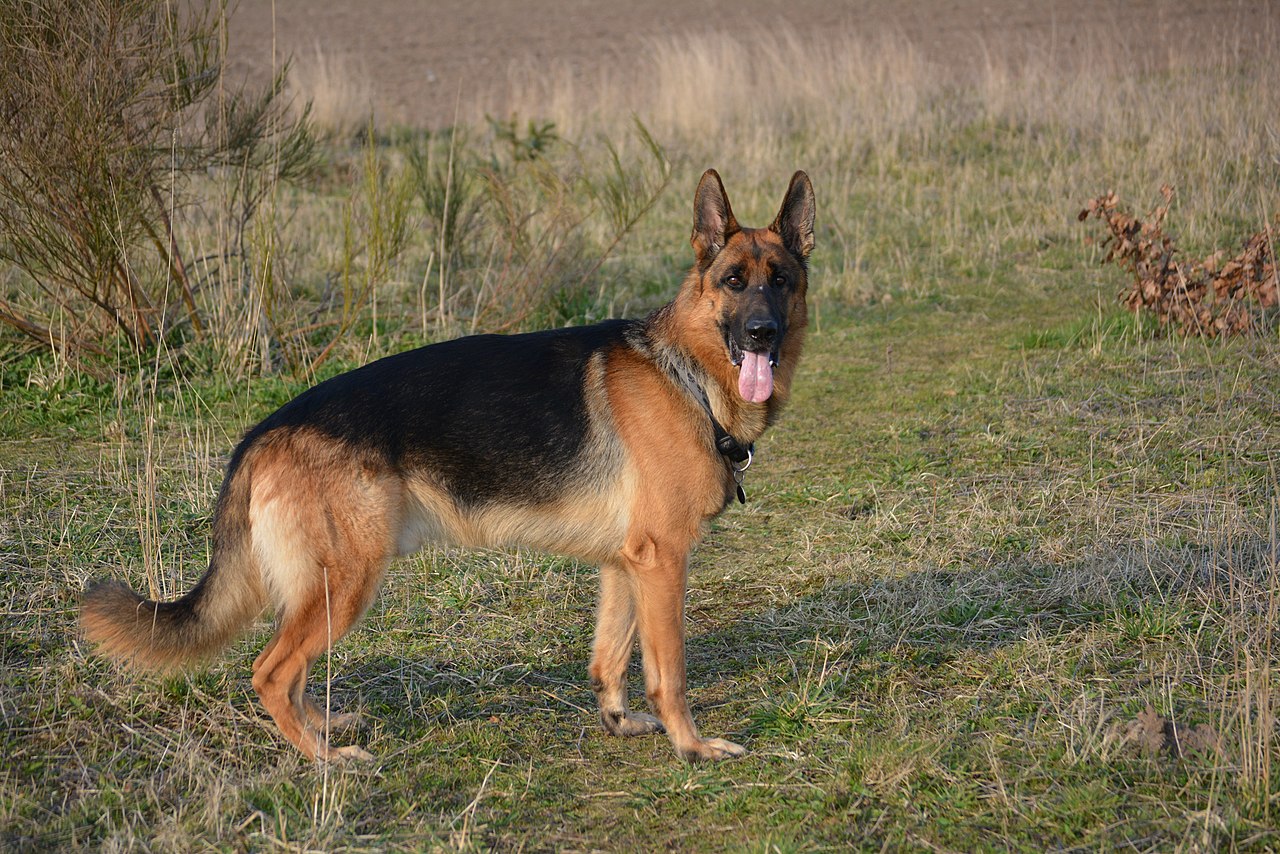
Kids and Shepherds can be a famous team, but the table says “with training” for a reason: a young Shepherd is a large, fast animal with herding instincts, and untaught, it may treat running children as sheep with poor discipline. Teach the dog calm greetings and teach the kids respect, and you get a guardian that tolerates ear-pulling from its own children while keeping one eye on the horizon. The other honest note is vocality. Shepherds have opinions, and a bored one will share them with the whole street.
Health & Lifespan
Shepherds live 9 to 13 years, and their health story is mostly a story about structure. Hip and elbow dysplasia run deep in the breed, worsened by decades of show-ring fashion for extreme rear angulation, so insist on OFA or PennHIP certifications for both parents of any puppy, and favor dogs that stand and move squarely. Degenerative myelopathy, a progressive spinal condition of older dogs, also occurs; a simple genetic test identifies carriers, and good breeders run it.
As a deep-chested breed, Shepherds also carry a real risk of bloat, a sudden twisting of the stomach that kills in hours. Learn the signs now: a swollen belly, unproductive retching, sudden restlessness after meals. Feed two smaller meals rather than one large one and keep hard exercise an hour away from dinner. Beyond that, keep the dog lean for the sake of those hips, check ears weekly, and be patient with the breed’s famously opinionated digestion. Adopting an adult? Ask the rescue about hip x-rays, and watch how the dog rises from lying down; stiffness there tells you more than any paperwork.
Training & Exercise
Training is where this breed pays you back. A Shepherd learns a new behavior in a handful of repetitions, remembers it for life, and visibly enjoys the work; this is why police forces and search teams keep choosing it. The flip side is that it learns your bad habits just as fast, and an untrained Shepherd is a serious problem in a way an untrained Beagle simply is not. Commit to reward-based classes from puppyhood, stay consistent, and grant the adolescent some grace; between eight months and two years you are living with a teenager who is certain it knows everything.
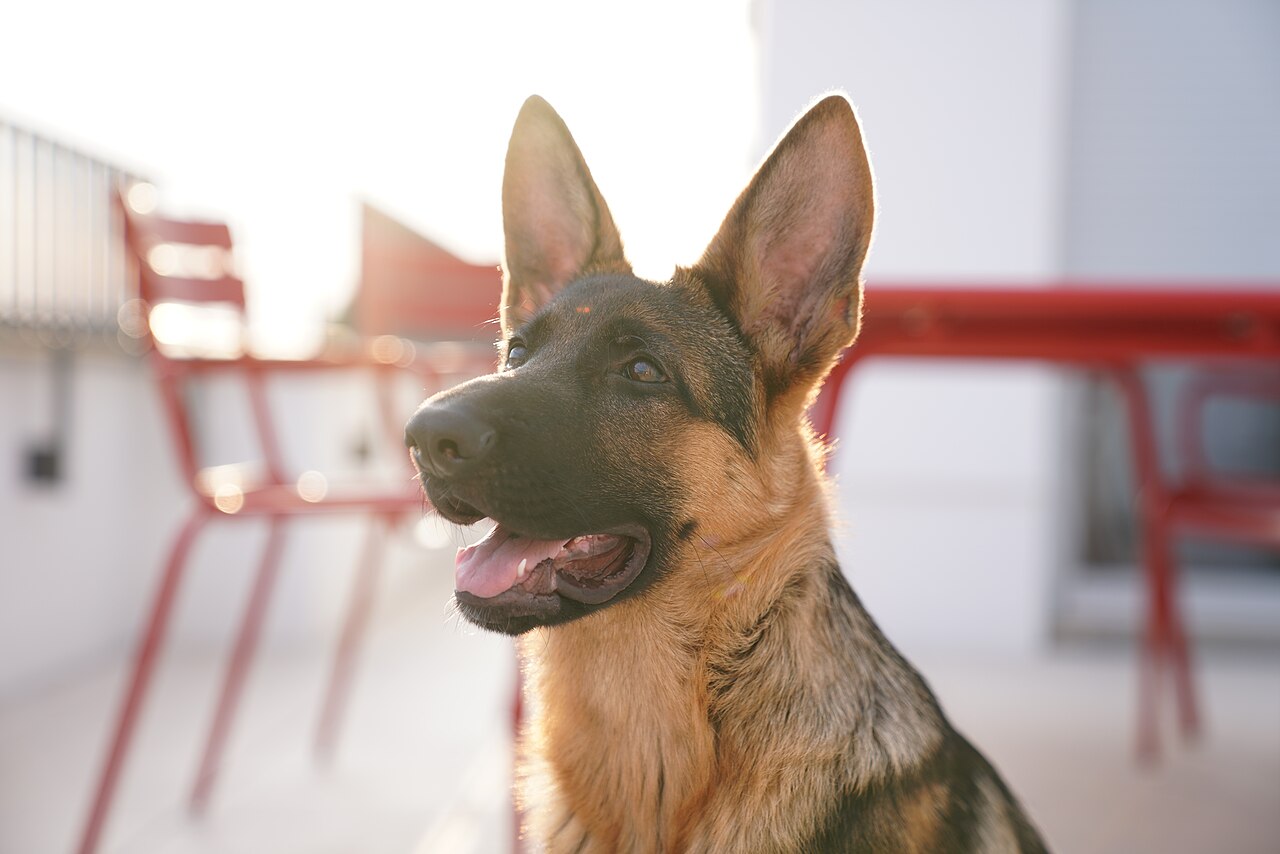
Budget 90 minutes of activity a day for an adult, and make some of it mental. A long walk plus a genuine job: obedience drills, scent games, tracking, fetch with rules, a puzzle feeder at dinner. The breed motto might as well be “give me a task or I will find one,” and self-assigned Shepherd tasks include excavating flowerbeds and patrolling the fence line at full voice. Puppies need it gentler: short sessions, soft ground, and no forced running until the joints finish growing around 18 months.
Grooming
Owners joke that the breed is really called the German Shedder, and the joke is accurate. That thick double coat drops hair every day of the year and lets go entirely twice a year, in quantities that make you question physics. Brush two or three times a week, daily during the seasonal blows, with an undercoat rake doing the heavy lifting. Bathe only every couple of months; the coat largely cleans itself. Never shave a Shepherd; the double coat is its insulation in both directions. Add nail trims, weekly ear checks, and tooth brushing, and skip the groomer entirely if you like. What you cannot skip is a good vacuum and lowered expectations for black clothing.
Is the German Shepherd Right for You?
The right Shepherd owner is home a lot, enjoys training as a hobby rather than a chore, and wants a dog that is genuinely a partner. Active families do well once the dog-and-kid rules are established, and committed first-timers can succeed if they start classes early and stick with them. This is the wrong breed if you want an easygoing dog that adores everyone on sight, if the house stands empty ten hours a day, or if heavy shedding is a dealbreaker. If you love the brains in a softer, smaller package, look at the Border Collie; if it is the devoted guardian you want with a wash-and-go coat, consider the Doberman Pinscher. And know this: Shepherds are among the most common purebreds in American shelters, surrendered by people who loved the image and underestimated the dog. The one waiting near you already knows how to be loyal. It just needs someone worth watching.
ADOPT THIS BREED
Find a German Shepherd to Adopt
In a kennel near you, a Shepherd is watching the walkway, still on duty, waiting for its person to finally show up. Shelters and rescues list new dogs every day.