Labrador Retriever Dog Breed Guide
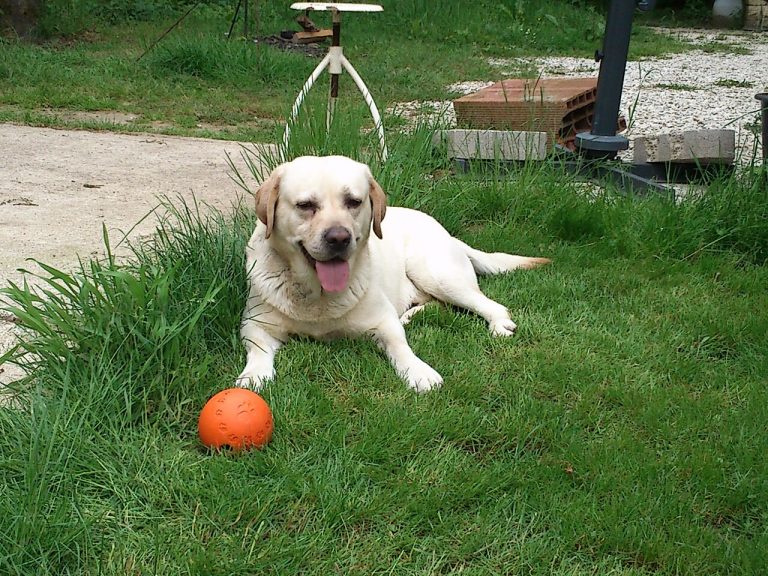
For more than thirty years running, the Labrador Retriever has been one of the most popular dogs in America, and the reason is disarmingly simple: Labs like you. They like your kids, your neighbors, your mail carrier, and the dog across the street. Behind the friendliness sits a serious working athlete, though, and that combination of big heart and big engine is exactly why so many adolescent Labs land in shelters when families underestimate the exercise bill.
| Size | Large |
|---|---|
| Weight | 55–80 lb |
| Lifespan | 10–12 years |
| AKC Group | Sporting |
| Energy Level | High |
| Good with Kids | Excellent |
| Shedding | Moderate |
| Trainability | Excellent |
Temperament & Personality
A Lab’s default assumption is that everything happening in the house concerns them. Cooking? They’ll supervise from a strategic spot near the counter. Kids wrestling in the yard? They want in, gently. Someone crying? A heavy head appears on the nearest knee. This is a dog that was bred to work all day beside a hunter and then share the boat ride home, and the result is an animal that is both tireless and profoundly companionable.
The famous Lab mouth deserves a mention. These dogs were built to carry things softly, and carry they will: shoes, remote controls, your entire arm during an enthusiastic greeting. Young Labs are boisterous, jump on people out of pure joy, and treat kitchen counters as a buffet at nose height. None of this is hard to train away, but it does need training. And they hate being alone. A Lab shut out of family life will eat the deck, dig to Australia, or bark its loneliness to the street. The breed’s quirks are not mysteries; they are the bill for all that sociability.
Health & Lifespan
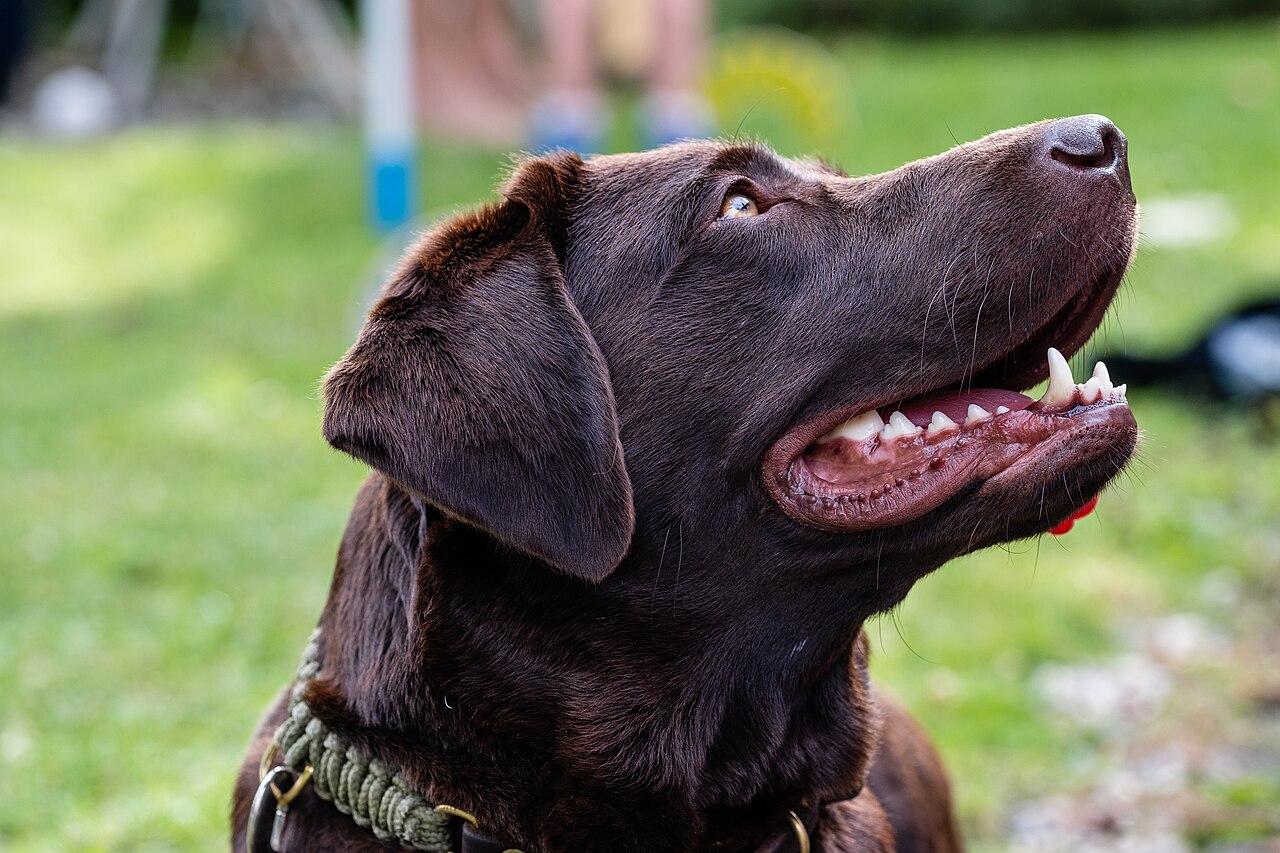
Labs typically live 10 to 12 years, and the single biggest thing you control is their waistline. This breed treats every meal like the last one on earth (researchers have actually traced part of that appetite to a gene variant), and an overweight Lab loads extra strain onto the exact joints the breed already struggles with. Hip and elbow dysplasia are the classic Labrador problems; keeping the dog lean is cheaper than surgery and works better than any supplement.
Buying a puppy? Ask for OFA or PennHIP hip and elbow scores on both parents, eye certifications, and a test for exercise-induced collapse, a Lab-specific condition where a dog suddenly loses coordination during hard play. Adopting? Ask the shelter or foster for vet records and watch for stiffness after exercise in older dogs. Week to week, the routine is simple: measured meals, ears checked and dried after swimming (a wet-eared Lab is an ear infection waiting to happen), teeth brushed, and an honest look at the ribs every month. You should be able to feel them without searching.
Training & Exercise
Training a Lab is about as easy as dog training gets, which is why they dominate service and guide work. They are food-motivated to a comical degree, genuinely want to please, and forgive beginner mistakes that would set a stubborn breed back weeks. That makes them a superb first dog. The catch is that an untrained Lab is still a 70-pound toddler with a tail, so start early: short, upbeat sessions, high-value treats, and a firm household rule about four paws on the floor before anyone says hello.
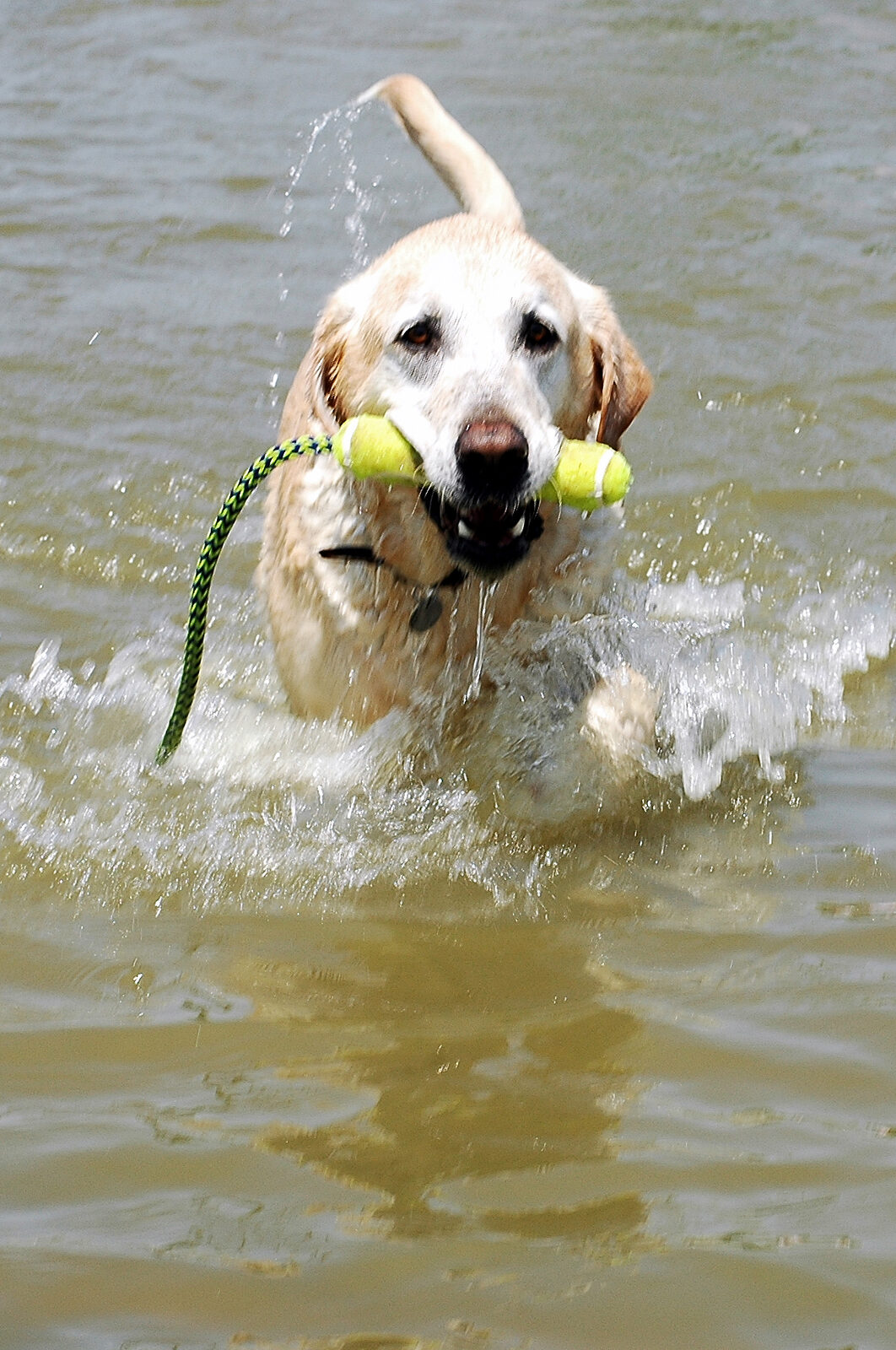
Plan on one to two hours of genuine exercise a day, scaled to age. For a young adult that might be a brisk morning walk, an evening of fetch until your arm gives out, and a swim whenever water presents itself; most Labs consider swimming the entire point of being alive. Puppies are the exception: keep sessions short and off hard surfaces until the growth plates close, around 12 to 18 months, and save the running for later. Mix in mental work too. A stuffed puzzle feeder or ten minutes of scent games settles a Lab’s evening more reliably than an extra mile.
Grooming
The Lab coat is a marvel of engineering: short, dense, and waterproof enough to shrug off a November lake. The trade-off is that it sheds, moderately all year and impressively twice a year, when the undercoat lets go in drifts that collect in corners like tumbleweed. Brush two or three times a week with a rubber curry or deshedding tool, daily during the blowouts, and accept that a lint roller now lives in your car. Baths only when needed; the coat’s natural oils are doing important work. The non-negotiable is ear care, especially for swimmers: check weekly, dry after water. Beyond that, nails and teeth. No groomer required.
Is the Labrador Retriever Right for You?
The right Lab home has time, energy, and a sense of humor about dog hair. Families with kids are the classic match, and first-time owners do well because the breed is so forgiving. A fenced yard helps but does not replace the daily outing; a Lab with a big yard and no company is lonelier than a Lab in an apartment with two real walks and a family that includes it. Walk away if the house is empty ten hours a day or if the exercise plan is theoretical. If you love the temperament but want less muscle and mud, look at the Golden Retriever, which trades some of the Lab’s boisterousness for coat work, or the smaller Beagle for a merry family dog in a portable size. And consider an adult from a rescue: the hardest year of Lab ownership is the first one, and a three-year-old Lab arrives with the puppy chaos already behind it and the devotion fully intact.
ADOPT THIS BREED
Find a Labrador Retriever to Adopt
Right now, a Lab in a shelter near you is holding a toy and hoping. Shelters and rescues list new dogs every day.