Doberman Pinscher Dog Breed Guide
Louis Dobermann was a German tax collector who wanted a dog that would guarantee he came home from work, and in the 1890s he bred himself one. The modern Doberman has been refined far past the tax-route enforcer: today’s dog is a sleek, brilliant, deeply people-bonded athlete that consistently ranks among the smartest and most trainable breeds alive, and whose actual owners describe it, to the surprise of everyone raised on movie villains, as a needy, blanket-stealing velcro dog that cries when you shower without it.
| Size | Large |
|---|---|
| Weight | 60–100 lb |
| Lifespan | 10–12 years |
| AKC Group | Working |
| Energy Level | High |
| Good with Kids | Yes (with training) |
| Shedding | Low |
| Trainability | Excellent |
Temperament & Personality
A Doberman assigns itself to its people with total commitment: it follows you room to room, presses against your side on the couch, burrows under blankets (the thin coat is genuinely cold), and monitors the household with an intelligence you can feel operating. With its own family’s children a well-raised Dobe is watchful and gentle, and the “with training” clause is about managing a fast, powerful adolescent, not about temperament risk.
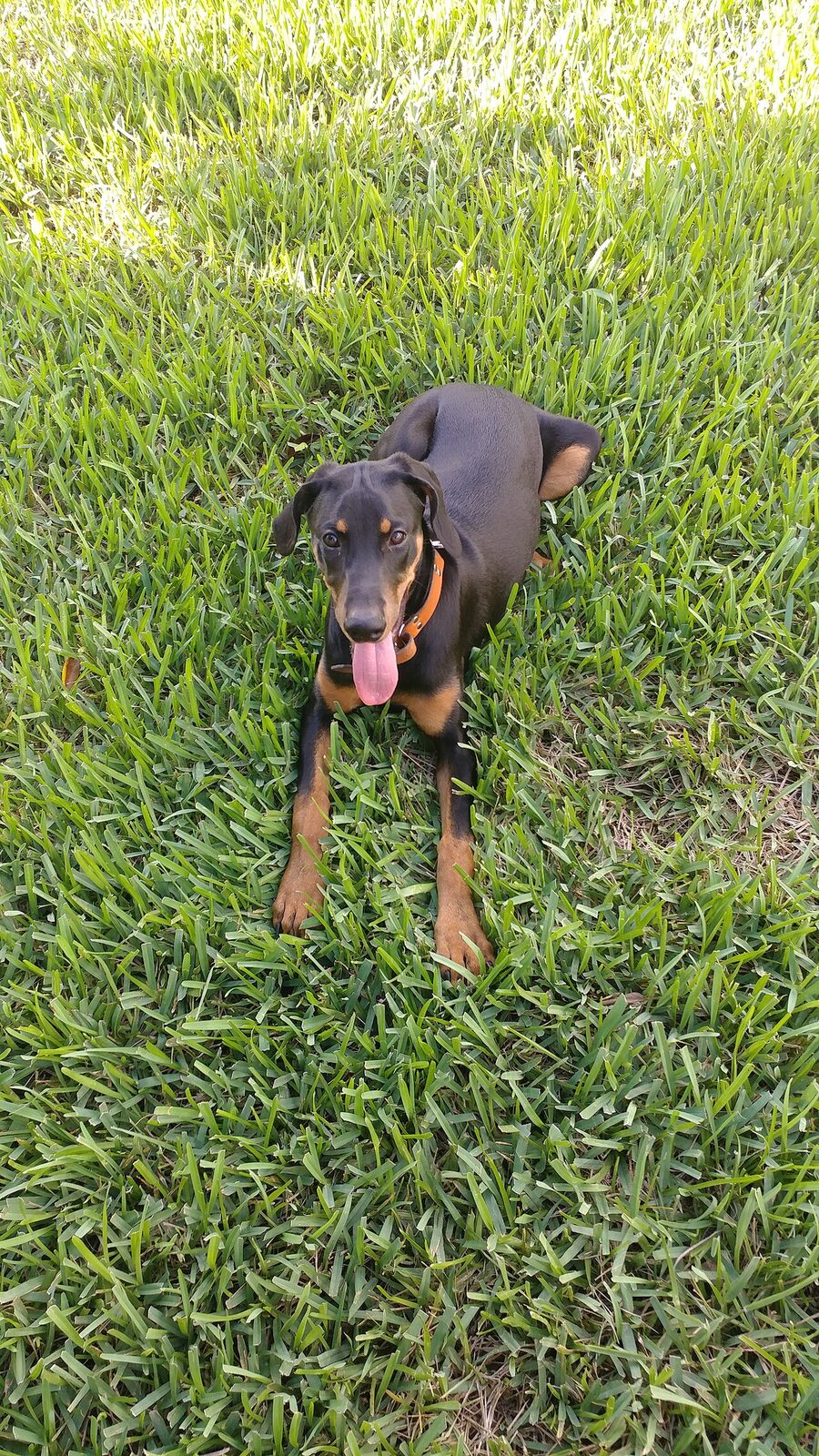
The guardian is still in there, expressed as discernment: Dobermans read rooms, positions, and intentions, and they place themselves between their person and anything they have not cleared yet. Early, generous socialization keeps that judgment calibrated and relaxed. Same-sex dog selectivity runs in some lines and deserves honest management. And the neediness is not a bug: this breed was designed to work in constant partnership with one human, and solitary confinement in a yard breaks it faster than almost any breed on this site.
Health & Lifespan
One condition dominates every honest Doberman conversation: dilated cardiomyopathy. DCM hits this breed harder than any other, with studies suggesting nearly half of Dobermans develop it across a lifetime, sometimes announcing itself as sudden collapse in an outwardly healthy dog. The defense is surveillance: annual cardiology screening (Holter monitor plus echocardiogram) from age three or four is what serious Doberman ownership looks like, and breeding stock without current cardiac clearances is a walk-away signal, no exceptions.
The supporting list: von Willebrand disease, a clotting disorder with a simple DNA test every breeder should show; hypothyroidism in middle age; cervical vertebral instability (“wobbler syndrome”) in some lines; and bloat awareness for a deep-chested athlete. A lean, screened, well-exercised Doberman lives 10 to 12 years, and the breed community fights for every one of them; supporting health-focused breeders and rescues is how the fight gets won.
Training & Exercise
Dobermans train like the working elite they are: fast to learn, hungry for the next lesson, and tuned to their handler at a frequency that makes obedience feel like conversation. This is why the breed excels at everything from service work to search and rescue. The requirement is engagement: reward-based methods, escalating challenges, and a handler who treats training as the relationship rather than a chore. Harshness is worse than wasted on a dog this perceptive; it is remembered.
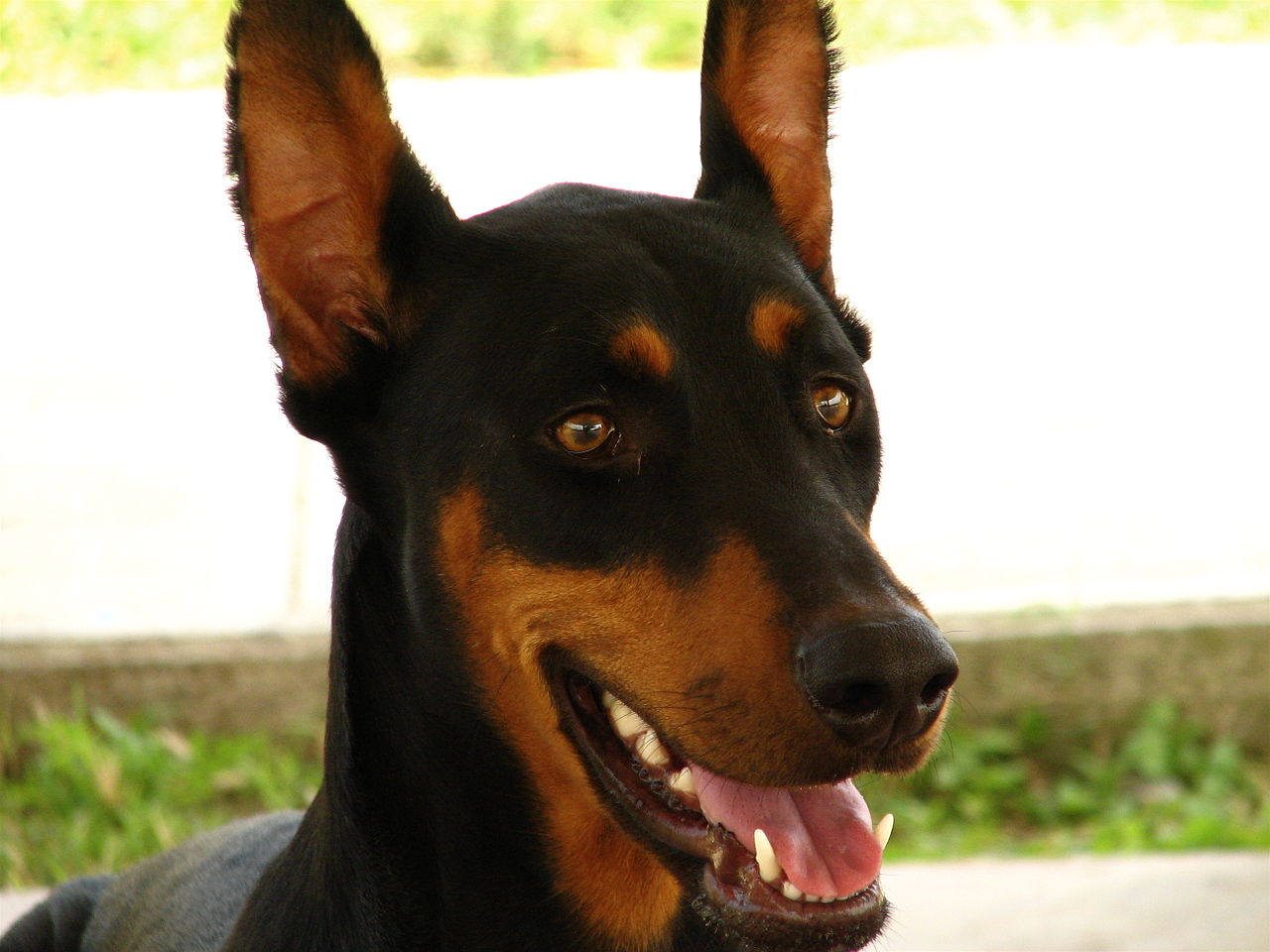
Exercise runs 90 minutes or more daily and should include real running: this is one of dogdom’s premier athletic partners for joggers and cyclists once growth plates close around 18 months. Add mental work daily (nosework, obedience chains, puzzle feeders) because the brain generates its own exercise requirement. In winter, the thin coat means the famous Doberman wardrobe is functional equipment, worn with the breed’s characteristic dignity and secret gratitude.
Grooming
The Doberman coat is the easiest on this site: a weekly pass with a rubber mitt over that seal-sleek hide, occasional baths, and a shine that looks professionally maintained by default. Shedding is low and the short hairs are discreet. Nails every couple of weeks, teeth regularly, ears weekly (natural or cropped alike), and a winter coat for the dog because there is no undercoat under there at all. Five minutes a week, total.
Is the Doberman Pinscher Right for You?
The right Doberman home has an active human who wants a full-time canine partner, time for daily training and running, a budget line for cardiac screening, and no illusions about leaving the dog alone all day. Experienced owners get the most from the breed; committed first-timers succeed with professional training support. Check local housing and insurance rules first, as with every guardian breed. If you love the devotion with more coat and herding fire, meet the German Shepherd; steadier mass, the Rottweiler; the same velcro athleticism in silver, the Weimaraner. Doberman rescues carry sweet, screened adults surrendered by homes that underestimated the neediness rather than the toughness. Adopt one, run it, train it, and surrender your blankets. The tax collector’s dog has one more collection to make, and it is you.
Adopt a Doberman Pinscher
Doberman rescues screen hearts and temperaments both, and match with care. Shelters and rescues list new dogs every day.