Great Dane Dog Breed Guide
German nobles bred the Great Dane to hunt wild boar and guard estates, then spent a few centuries softening it into what owners now call the world’s biggest lap dog, a title the Dane takes literally and attempts daily. Standing thirty-plus inches at the shoulder and stretching six feet on a couch it has fully annexed, the Dane is the “Apollo of dogs”: enormous, elegant, and so gentle with its family that the main safety briefing concerns the tail, which operates at coffee-mug height and takes no prisoners.
| Size | Large |
|---|---|
| Weight | 110–175 lb |
| Lifespan | 7–10 years |
| AKC Group | Working |
| Energy Level | Moderate |
| Good with Kids | Very Good |
| Shedding | Moderate |
| Trainability | Good |
Temperament & Personality
Danes are people dogs to a degree that surprises first-time owners: they lean, they follow, they rest their chins on tables and shoulders and heads, and they genuinely believe that a lap that held them at ten weeks remains valid seating at 150 pounds. With children they are patient and careful in the way of dogs that know their own size; the collision risk is real but accidental, a happy tail and a toddler occupying the same airspace.
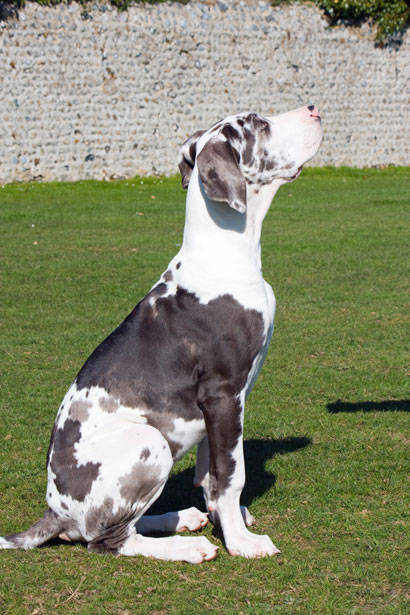
The guardian heritage survives as presence rather than aggression: a Dane in the window is home security by silhouette, and most extend automatic friendship to properly introduced strangers. They wilt in isolation, whine opinions at conversational volume, and counter-surf by simply looking down at the counter. Indoors, a well-exercised Dane is famously lazy, spending twenty hours a day in states ranging from nap to deeper nap, which is how a horse-sized dog manages to be a genuinely practical housemate.
Health & Lifespan
The contract runs 7 to 10 years, and the emergency to memorize before the dog comes home is bloat: Great Danes are the number-one breed for gastric torsion, full stop, with lifetime risk estimates near forty percent. The signs, one more time, because with this breed it is a when-not-if briefing: swollen belly, unproductive retching, sudden pacing distress, usually within hours of a meal. Two or three calm meals daily, no hard exercise around eating, and a serious conversation with your vet about preventive gastropexy, which many Dane owners schedule with spay or neuter as standard practice.
The heart is the other big-ticket organ: dilated cardiomyopathy runs in the breed, so breeding stock should carry cardiology clearances and adult Danes benefit from periodic heart checks. Add hips (paperwork, always), slow lean puppy growth on large-breed food to protect a skeleton doing construction at record speed, and osteosarcoma vigilance (a persistent limp gets imaged). Everything medical is priced at Dane scale; insure early and budget honestly.
Training & Exercise
Train the puppy while it still weighs less than you, because the window closes fast: leash manners, no jumping, and a reliable “off” are survival skills when the adolescent hits triple digits by its first birthday. Danes are willing, sensitive students who learn steadily with rewards and shut down under harshness; they respond to calm consistency like the estate dogs they were. Socialize broadly and early so that guardian reserve matures into confidence.
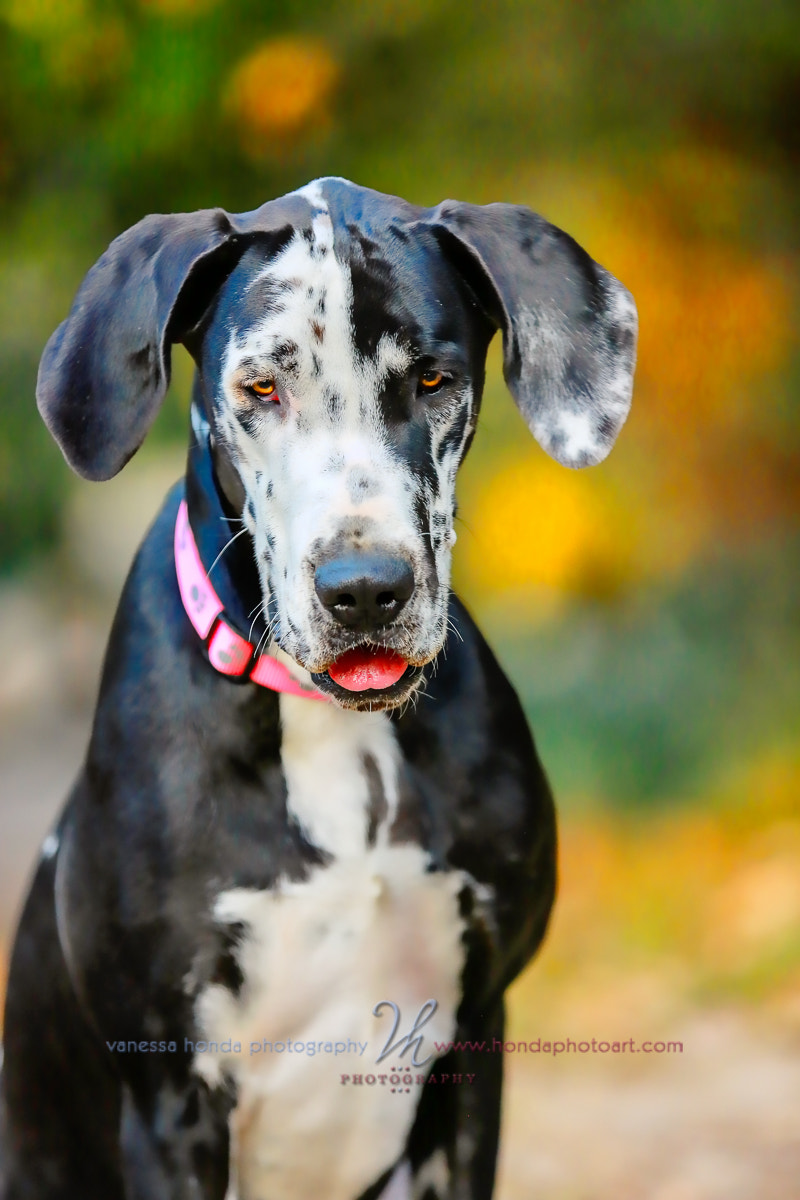
Exercise is moderate and structured: a couple of good walks totaling 45 to 60 minutes, a chance to stretch into that ground-eating trot a few times a week, and strict joint protection until growth plates close around 18 to 24 months, which for a Dane means no jogging, no stairs sprints, and no leaping from vehicles through most of what looks like adulthood. The payoff for patience is a calm giant that matches apartment life better than half the breeds a third its size.
Grooming
Grooming a Dane is a five-minute weekly appointment with a rubber curry mitt, scaled across a lot of acreage: the short coat sheds moderately and cleans itself well, and baths are occasional events best held outdoors in summer. Nails matter more than average, since long nails change the gait of a dog carrying this much weight; every two weeks, without fail. Ears weekly, teeth regularly, drool management per dog (some Danes are dry, some are fountains, and you will know within the week).
Is the Great Dane Right for You?
Choose a Dane if you want maximum dog with minimum chaos: families with sturdy kids, calm households with room for a very large sofa occupant, and anyone willing to trade a shorter contract for an enormous, easy heart. The disqualifiers are financial (giant vet bills), spatial (a Dane in a studio is a furniture rearrangement), and emotional, if the lifespan paragraph landed hard. If you love the gentle-giant brief with more fur and Alpine romance, meet the Bernese Mountain Dog or Saint Bernard; for the maximum-mass version, the Mastiff. Danes reach rescue when their size outgrows an unprepared home, and adult adoption suits this breed beautifully: the chaos years are done, the couch skills are certified, and the lean is fully calibrated. Clear a cushion. It will need most of them.
Adopt a Great Dane
Dane rescues know each dog’s couch requirements precisely. Shelters and rescues list new dogs every day.