Saint Bernard Dog Breed Guide
Two centuries ago, Saint Bernards worked the snowfields of an Alpine pass, digging travelers out of avalanches for the monks of the Great St. Bernard Hospice. The dog sprawled across your kitchen floor today carries that history in a body built like upholstered furniture and a temperament so patient the breed earned the nickname “nanny dog.” What it asks in exchange is space, tolerance for drool in unexpected places, and a willingness to love a giant who will not be here as long as smaller dogs. People who say yes to that bargain tend to say yes to it for the rest of their lives, one Saint after another.
| Size | Large |
|---|---|
| Weight | 120–180 lb |
| Lifespan | 8–10 years |
| AKC Group | Working |
| Energy Level | Low |
| Good with Kids | Excellent |
| Shedding | Heavy |
| Trainability | Very Good |
Temperament & Personality
A Saint Bernard’s great life skill is being present. It leans against your leg with the force of a closing door, positions itself where the family is, and observes household chaos with the calm of a dog that has seen avalanches and is not impressed by your toddler’s tantrum. With children the breed is famously gentle; the bigger risk is an affectionate tail clearing a coffee table or a happy lean toppling a small person, so supervision is about physics, not temperament.
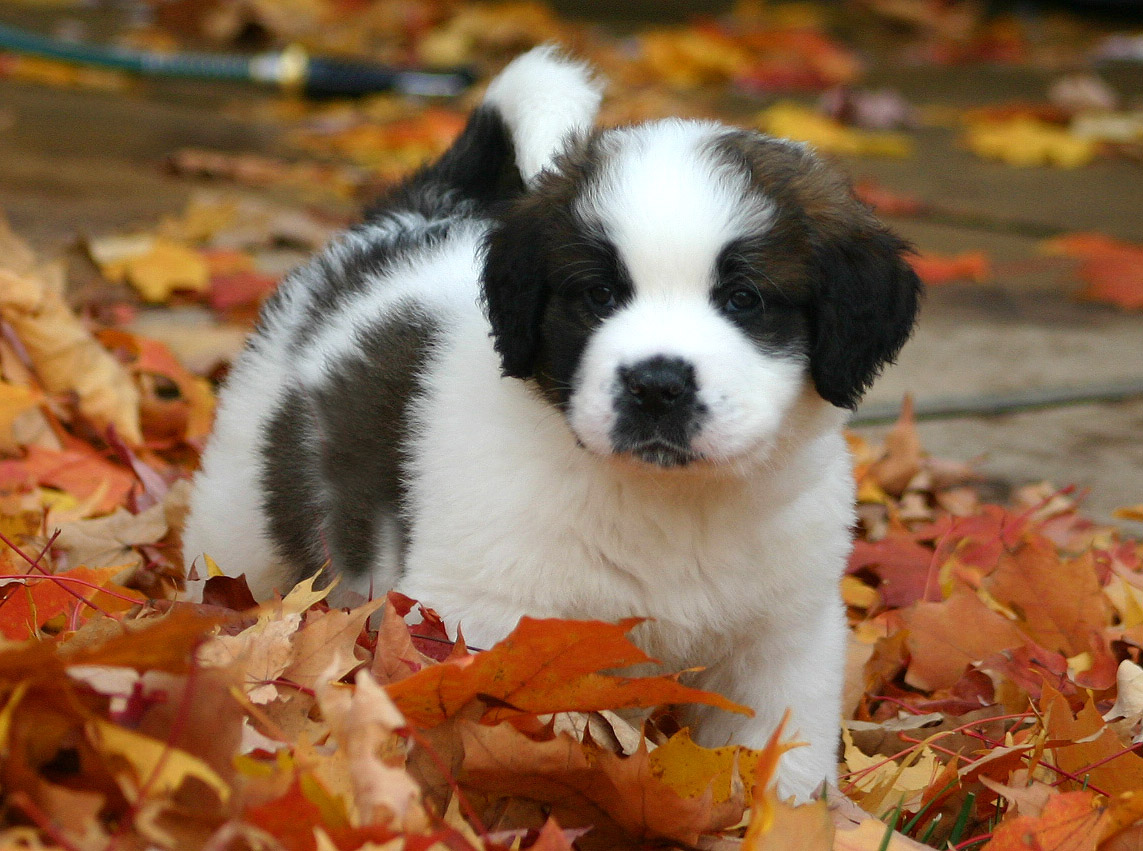
They are social giants, friendly with strangers once introductions are made and typically easy with other pets. Leave one alone too much and it wilts; this is a breed that was bred to work beside people and considers your company the job. And yes, the drool is real. After every drink, after every nap, and spectacularly after anything exciting, a Saint produces slingers that reach places you did not know a dog could reach. Owners keep towels by the door and call it rent.
Health & Lifespan
Here is the hard part: a Saint Bernard lives 8 to 10 years, and that number does not negotiate much. Giant breeds pay for their size with shorter lives, and anyone who brings one home should do it knowing the goodbye comes early. The years you get are wonderful. There are simply fewer of them, and pretending otherwise helps nobody.
The practical health list is classic giant-breed: hip and elbow dysplasia (ask for OFA or PennHIP scores on both parents), and bloat, the sudden stomach twist that is an emergency measured in hours. Learn its signs: a swollen belly, retching that produces nothing, restlessness after eating. Feed smaller meals twice a day and keep exercise gentle around mealtimes. Saints also overheat easily with that coat and bulk; summer walks happen at dawn and dusk, and shade and water are non-negotiable. Keep the weight down, watch the growth rate of puppies (slow and steady protects the joints), and budget honestly: everything from surgery to arthritis medication costs more at 160 pounds.
Training & Exercise
Train the puppy like it will one day outweigh you, because it will, probably before its first birthday. Leash manners, polite greetings, and a reliable “off” are not tricks for a Saint Bernard; they are the difference between a manageable family dog and a friendly catastrophe. Fortunately the breed is willing and biddable, learning steadily with reward-based methods and repetition. It is not a Border Collie and will not pretend to be one; give it a beat to think and it gets there.
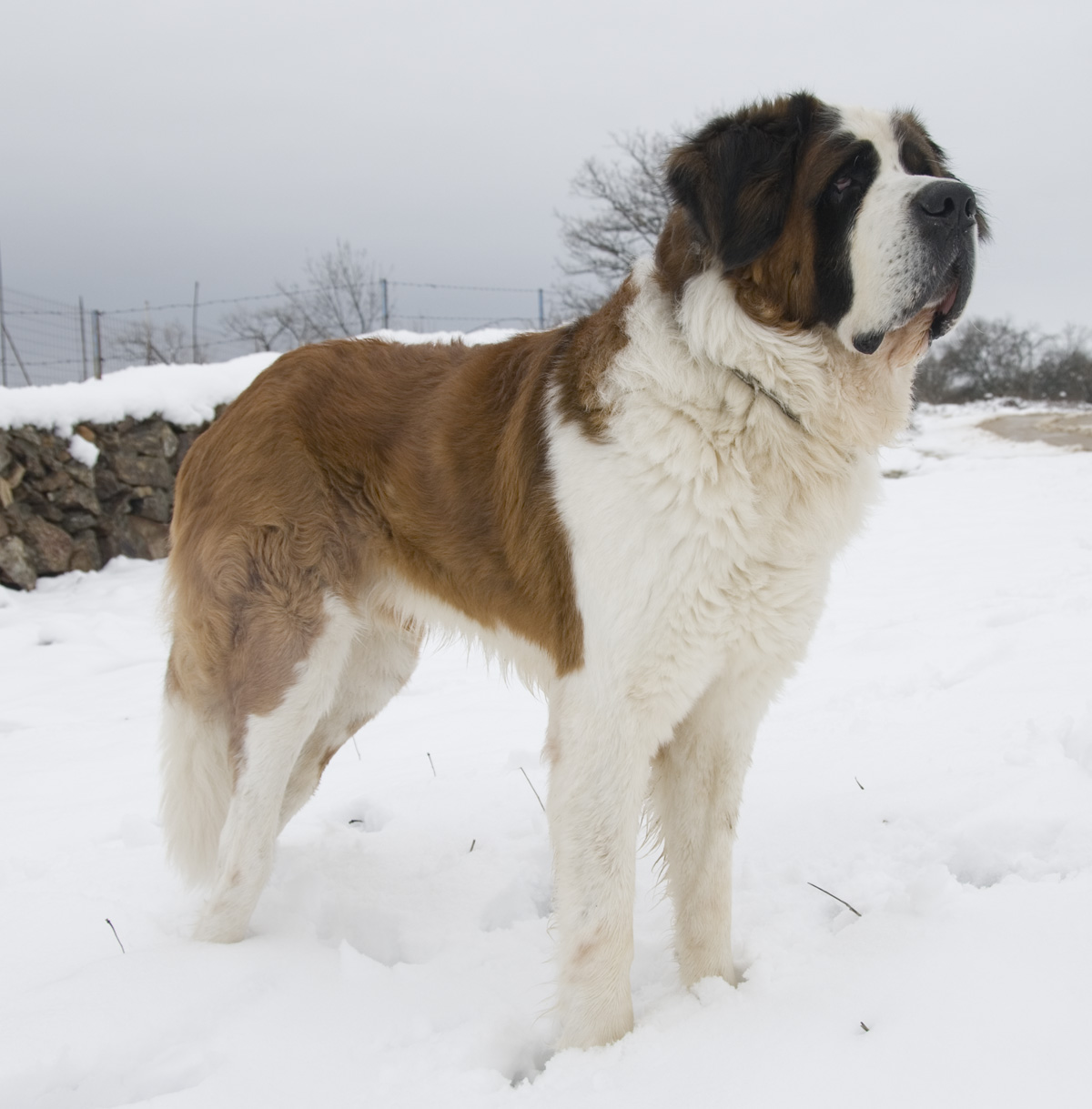
Exercise needs are refreshingly modest: a couple of unhurried walks a day, 30 to 60 minutes total, plus room to potter. A snowy day changes everything, and you will watch 150 pounds of dignity turn into a snowplow with ears. Protect the puppy’s joints fiercely in the first 18 months: no stairs marathons, no jogging, no jumping from the car. The adolescent Saint grows so fast that restraint now buys mobility at eight.
Grooming
Both coat types, the short and the rough, shed heavily all year and torrentially in spring and fall. Brush two or three times a week with an undercoat rake, daily during the blows, and accept that Saint hair travels: your car, your office, the butter dish. Baths are an event requiring a plan (and possibly a garden hose in summer), so most owners keep them occasional. Check the ears weekly, trim nails regularly, wipe the face folds and jowls daily if you value your walls, and brush teeth. No fancy trims required. Just volume.
Is the Saint Bernard Right for You?
Say yes if you have space, a calm household or the wish for one, kids who want a patient giant to grow up beside, and a budget that can absorb big-dog vet bills. Say no if you live small, travel constantly, need a tidy house, or cannot face losing a dog young. If you love the gentle-giant temperament but want more athleticism, meet the Newfoundland, the Saint’s water-loving cousin; for a giant heart in a slightly smaller, longer-lived package, look at the Bernese Mountain Dog. And check the rescues first: Saints are surrendered regularly by people who bought a fluffy puppy and met a 160-pound adolescent eight months later. Somewhere out there is a mountain of a dog waiting to lean on someone. Bring towels.
Adopt a Saint Bernard
Giant-breed rescues know their dogs well and match carefully, because they know exactly what a Saint needs to thrive. Shelters and rescues list new dogs every day.