Siberian Husky Dog Breed Guide
In 1925, relay teams of Siberian Huskies ran diphtheria serum 674 miles through an Alaskan blizzard to save the town of Nome, and the breed has been coasting on the publicity ever since, fairly. This is an endurance machine scaled like a medium dog: bred by the Chukchi people to pull light loads absurd distances on minimal food, wrapped in a coat that ignores blizzards, and equipped with a sense of humor that has made it the internet’s favorite comedian. The same equipment, installed in a suburban backyard, produces the most talented escape artist in dogdom and one of the most surrendered breeds in America.
| Size | Large |
|---|---|
| Weight | 35–60 lb |
| Lifespan | 12–14 years |
| AKC Group | Working |
| Energy Level | Very High |
| Good with Kids | Very Good |
| Shedding | Heavy |
| Trainability | Moderate |
Temperament & Personality
Huskies are pack animals to the bone: friendly with everyone, wonderful with children they are raised alongside, and hopeless as guard dogs, since the burglar would be greeted, escorted, and possibly helped carry things. What they are not is compliant. The Chukchi bred dogs that could overrule a driver about thin ice, and that independent judgment survives intact. A Husky hears your command, considers it, and renders a verdict. Owners who find this hilarious do well; owners who find it insubordinate suffer.
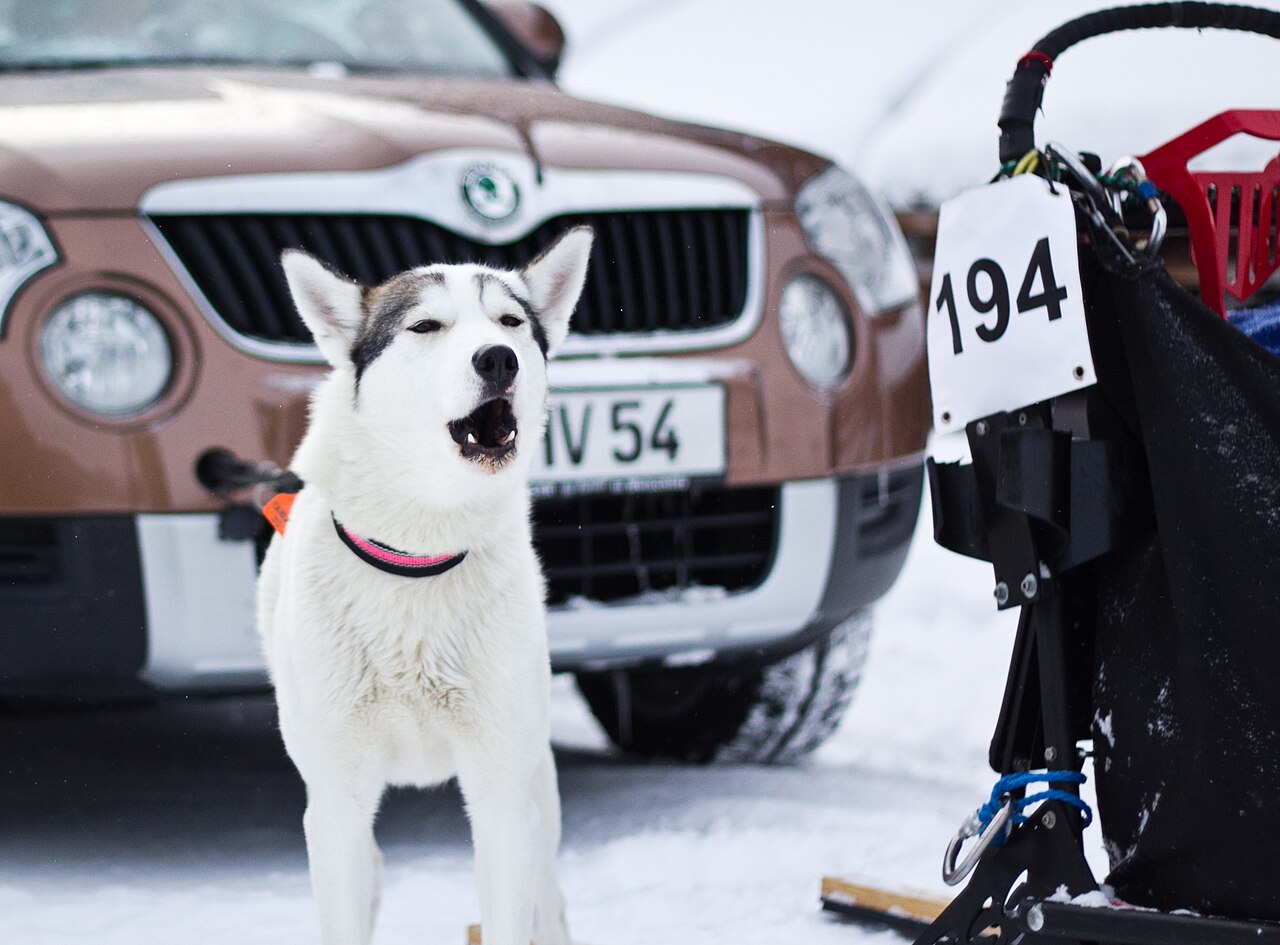
Budget for three breed facts. The voice: Huskies rarely bark but howl, “talk,” and deliver theatrical screams that neighbors will have opinions about. The prey drive: cats and small animals outside the family pack are hunted, seriously, and even in-home cat truces need careful engineering. The escapes: Huskies climb fences, dig under them, open latches, and slip harnesses with a magician’s timing, and a loose Husky does not hang around the yard; it commutes. Six-foot fencing with dig guards is entry-level equipment.
Health & Lifespan
The good news section: Siberians are among the healthiest purebreds going. Centuries of survival breeding left a tough dog that routinely reaches 12 to 14 years with an unremarkable medical file. The watch-list is short. Eyes lead it: juvenile cataracts, corneal dystrophy, and progressive retinal atrophy occur in the breed, so an annual eye exam is worthwhile and breeders should show ophthalmologist clearances on both parents. Hips are sounder here than in most breeds this size, but scores are still worth asking for, and the occasional hypothyroid Husky turns up in middle age (unexplained weight gain plus coat changes equals a thyroid test).
Management is mostly thermal and caloric. The coat handles cold to forty below but makes heat the real danger: summer exercise moves to dawn and dusk, shade and water always, and the coat never gets shaved, since it insulates in both directions and regrows badly. Huskies are famously efficient eaters, bred to run far on little, so measure meals; a fat Husky is an avoidable tragedy. Keep the athlete lean and the eyes checked, and this is a breed that mostly just costs you kibble and fence repairs.
Training & Exercise
Train with food, novelty, and realistic expectations. Huskies learn fast and comply selectively, and the honest rulebook has one line in bold: this breed is never trustworthy off leash. Not after training, not after years of good behavior; the running instinct is the whole dog, and a single squirrel can relocate it to the next county. Leashes, long lines, and fenced areas are not restrictions on a Husky’s happiness, they are its life insurance. Like its bigger freight-hauling cousin the Alaskan Malamute, it needs an owner who negotiates rather than commands.
Exercise is the mortgage on this breed: 90 minutes to two hours daily of real output, and a walk around the block is a rounding error. Running, bikejoring, skijoring, canicross, weighted hikes; the pulling sports are not novelties for a Husky, they are the point of it. Under-exercised Huskies redecorate: excavated sofas, abstract drywall work, laundry redistributed across the county via the fence they cleared. A tired Husky, by contrast, is an affectionate, ridiculous, deeply pleasant housemate who screams only about important matters, such as baths.
Grooming
Twice a year the undercoat lets go entirely, and Husky owners measure the event in grocery bags. During the blow: daily sessions with an undercoat rake, outdoors, downwind of anything you love. The rest of the year, a thorough brushing once or twice a week suffices, and the coat rewards you by being nearly odorless and remarkably self-cleaning; baths a few times a year genuinely cover it. Nails, teeth, weekly ear checks, and a robust vacuum complete the program. Do not shave, ever. The coat is the dog’s climate system, summer included.
Is the Siberian Husky Right for You?
Say yes if you run, bike, or mush; if your fencing would impress a zoning inspector; and if you want a hilarious, sociable adventure partner more than an obedient one. Cold-climate athletes are the breed’s dream demographic. Say no for apartments without a serious exercise plan, cat households, hot climates, and first-time owners hoping for compliance. If you love the look with more power and even more independence, meet the Alaskan Malamute; for the smiling arctic aesthetic with a softer, more biddable heart, the Samoyed. And know that shelters are full of eighteen-month-old Huskies bought for their blue eyes by people who never read the mileage clause. Northern-breed rescues will match you honestly. Somewhere in one of them, a dog that was built to cross Alaska is doing laps of a kennel run, waiting for someone with somewhere to go.
Adopt a Siberian Husky
Husky rescues overflow after every viral video cycle, and the dogs inside are exactly as wonderful as advertised, just more athletic. Shelters and rescues list new dogs every day.