Boxer Dog Breed Guide
Nobody has ever accused a Boxer of hiding its feelings. This is a dog that greets you by folding itself in half, wiggling its entire back end because the docked-tail ancestors needed a bigger gesture, and possibly performing the famous “kidney bean” dance around your legs. German breeders built the Boxer as a working guardian with an athlete’s body and a comedian’s soul, and the mix has been winning families over for a century. It stays a puppy at heart for three years and a clown for life.
| Size | Large |
|---|---|
| Weight | 50–80 lb |
| Lifespan | 10–12 years |
| AKC Group | Working |
| Energy Level | High |
| Good with Kids | Excellent |
| Shedding | Moderate |
| Trainability | Very Good |
Temperament & Personality
Boxers are patience personified with their own children and famously gentle with babies, which is why generations of pediatric households have kept them. The same dog is a genuine watchdog: alert, discerning, and imposing enough at the door that nobody checks whether the welcome is sincere. With strangers properly introduced, it usually is, enthusiastically. Boxers also talk, a repertoire of grumbles, groans, and the signature “woo-woo,” deployed whenever household policy needs debating.
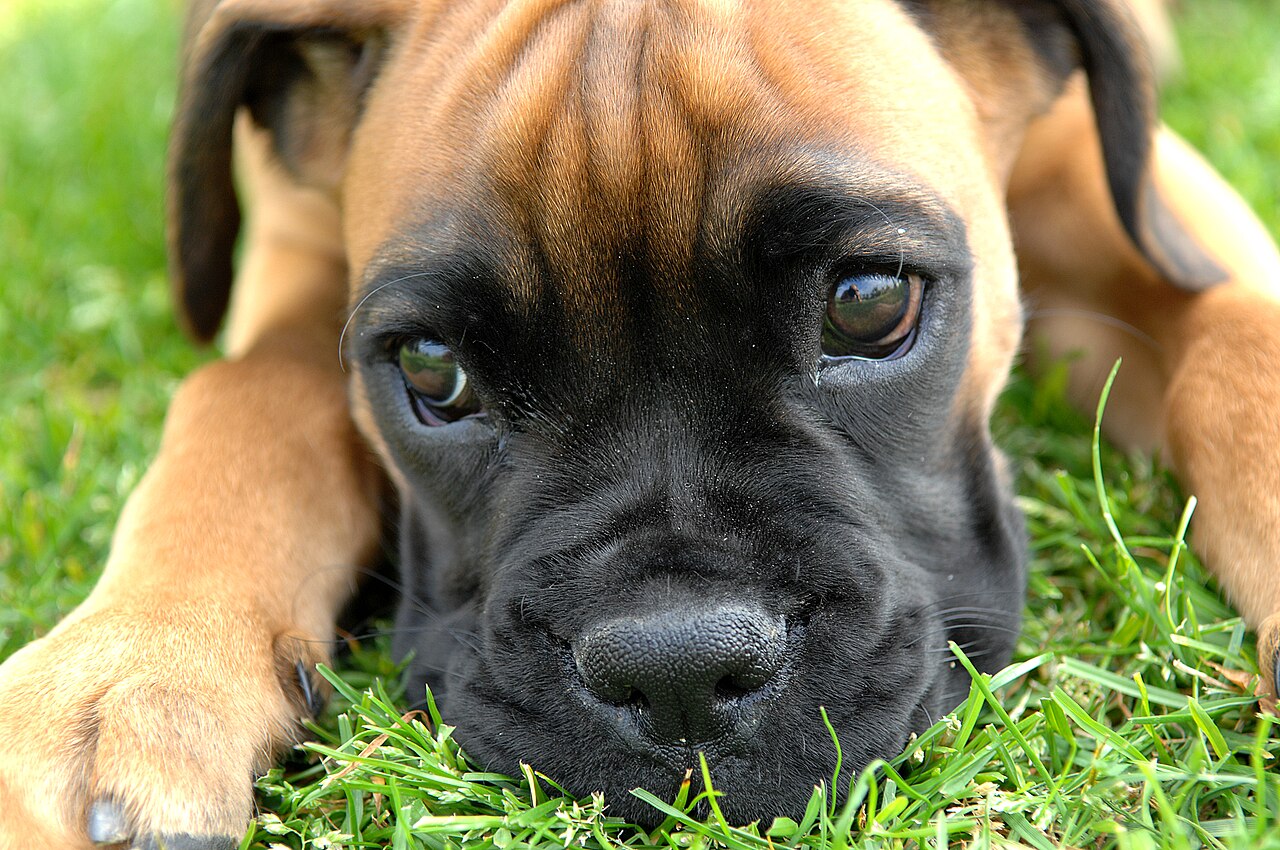
The catch is the exuberance budget. A young Boxer is fifty pounds of airborne affection with paws like oven mitts, and the jumping, the play-boxing (the breed name is not a coincidence), and the sheer contact-sport enthusiasm need channeling before the dog reaches full mass. Boxers also do badly alone; this is a velcro breed that considers itself family and grieves being treated otherwise.
Health & Lifespan
Here is the breed’s hard paragraph: Boxers carry one of dogdom’s heavier cancer burdens, with mast cell tumors, lymphoma, and brain tumors all over-represented, and they own an entire heart condition, Boxer cardiomyopathy (ARVC), which can cause sudden collapse in outwardly healthy dogs. A typical span is 10 to 12 years; many make it happily, some are taken cruelly early. Buying a puppy? Insist on cardiac screening (Holter monitoring in the breeding stock, not just a stethoscope pass) and degenerative myelopathy DNA results. Any lump on an adult Boxer, at any age, gets aspirated at the vet rather than watched; with this breed that habit saves lives.
The shorter muzzle brings a mild version of the flat-face clause: Boxers overheat faster than long-nosed breeds, so summer exercise shifts to the cool hours, and a few snore with commitment. Add bloat awareness (deep chest: two meals, calm after eating, know the signs) and hip screening, and the rest is routine. Feed measured meals; a fat Boxer is a strain on exactly the systems that need slack.
Training & Exercise
Boxers are smart, willing, and allergic to boredom: they learn fast, then improvise embellishments, and a training plan that survives contact with Boxer creativity is one built on short, playful, well-paid sessions. The essential curriculum is greeting manners taught before adulthood, because an untrained Boxer says hello like a linebacker with feelings. Harsh handling wastes this breed entirely; it runs on approval and games.
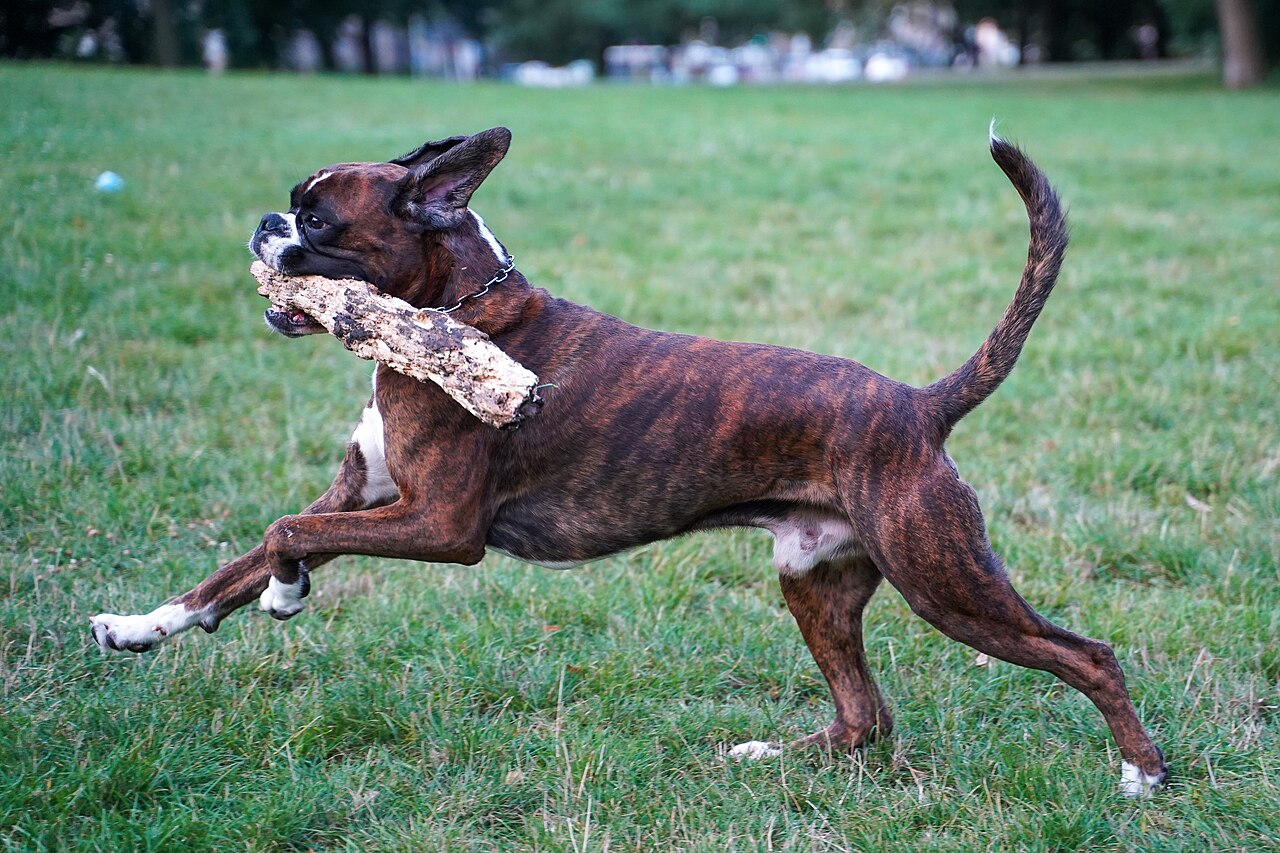
Give an adult Boxer an hour or more of daily exercise in Boxer currency: sprints, fetch, wrestling matches with dogs it likes, brisk walks with a human it loves. They make good running partners in cool weather after the joints mature around 18 months, and terrible ones in July; that muzzle sets the summer schedule. Mental work matters too, or the creativity redirects to projects involving upholstery.
Grooming
The Boxer coat is a five-minute weekly job: a rubber mitt over that short, glossy hide, done. Shedding is moderate and the short hairs are polite by big-dog standards. The extras are the face and the drool factor after drinks (modest but real), an occasional bath, nails every couple of weeks, teeth as often as you can win, and a weekly ear check. In cold climates a winter coat is not costume; this breed wears no undercoat and feels the wind.
Is the Boxer Right for You?
Choose a Boxer if your family wants a patient, protective, ridiculous athlete and can supply exercise, company, and a sense of humor about the woo-woos. It is the classic kid dog for households sturdy enough for contact celebration. Skip it if the house is empty all day, if summers are brutal without air conditioning, or if the cancer and cardiac paragraphs above gave you honest pause; they deserve it. If you love the guardian-clown package with less health baggage, meet the Great Dane‘s gentle bulk or the Rottweiler‘s steadier gravity. Boxer rescues stay busy with adolescents surrendered at peak bounce, one training course short of wonderful. Adopt one, finish the course, and you get a dog that will spend a decade doing its little dance every single time you come home, including from the mailbox.
Adopt a Boxer
Somewhere near you, a Boxer is rehearsing its welcome dance for an audience that has not arrived yet. Shelters and rescues list new dogs every day.