Rottweiler Dog Breed Guide
The Rottweiler’s résumé starts with the Roman legions, whose drover dogs marched cattle across the Alps and stood guard over the camp, and runs through the German town of Rottweil, where butchers trusted the breed so completely they tied their money pouches to its collar. That is the animal behind the tabloid headlines: a calm, confident working guardian whose defining trait is not aggression but judgment. A well-raised Rottweiler is one of the steadiest dogs in existence. The breed’s real problem has always been the humans who want it for the wrong reasons.
| Size | Large |
|---|---|
| Weight | 80–135 lb |
| Lifespan | 9–10 years |
| AKC Group | Working |
| Energy Level | Moderate |
| Good with Kids | Yes (with training) |
| Shedding | Moderate |
| Trainability | Very Good |
Temperament & Personality
With its family, a Rottweiler is a devoted, often comic shadow: a hundred-pound dog that leans its whole weight against your legs (the famous “Rottie lean,” possibly inherited from ancestors who leaned on cattle), grumbles conversationally when content, and tries to be a lap dog with total sincerity and partial success. Well-socialized Rotties are calm with children and tolerant of household chaos, though their bulk warrants supervision around small kids on pure physics.
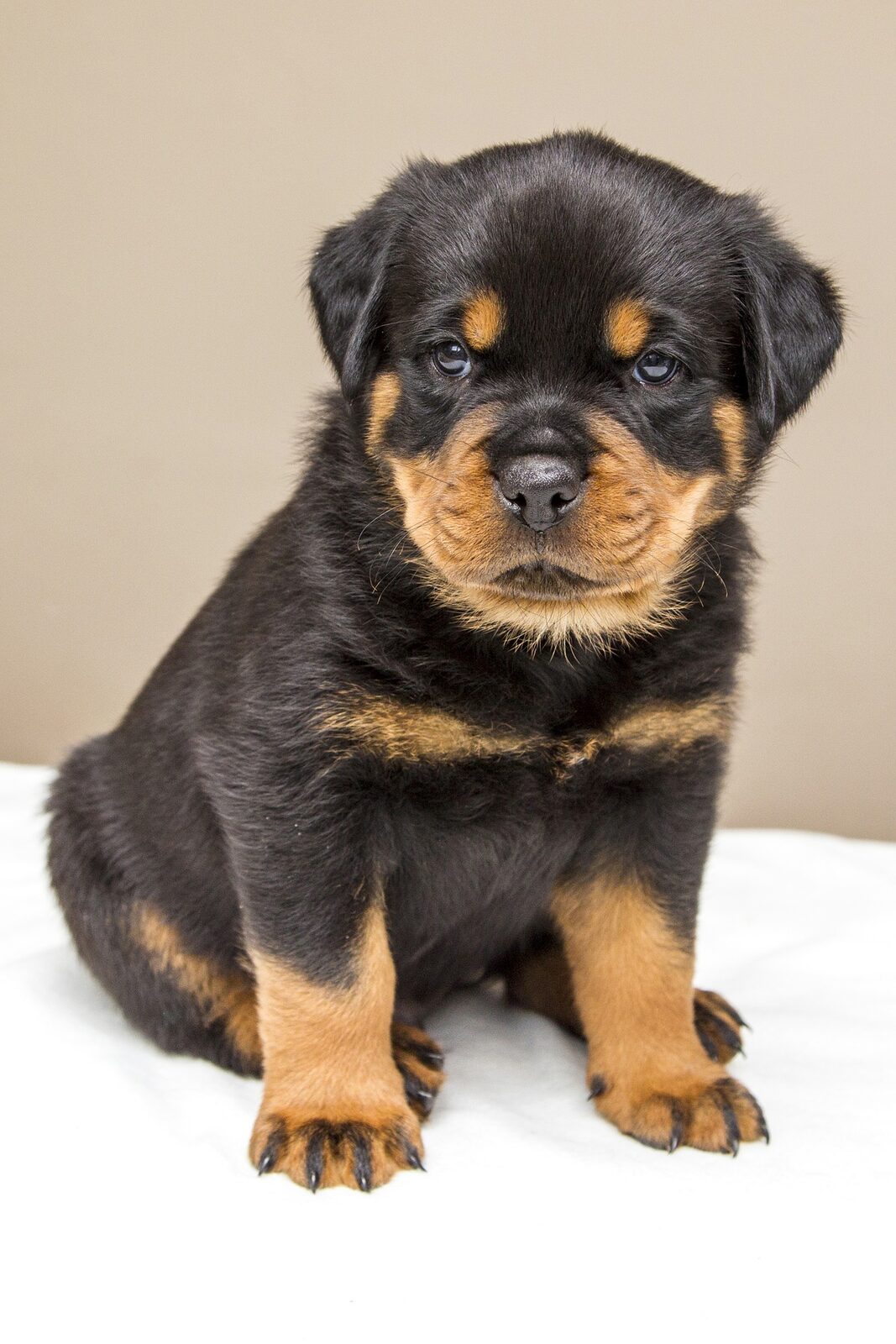
With strangers, the breed default is aloof assessment: a Rottweiler watches, positions itself, and decides, and that guardian judgment is exactly why early, extensive socialization is not optional homework but the core of responsible ownership. The same-sex dog selectivity some Rotties carry needs honest management, and the breed’s confidence means it will run any household whose humans decline the job. None of this is a flaw; it is a working guardian doing what it was built for, and it is why this magnificent breed belongs with committed owners and not with anyone shopping for intimidation.
Health & Lifespan
The hard paragraph: Rottweilers live 9 to 10 years on average, and cancer is the main reason, with osteosarcoma (bone cancer) hitting this breed at some of the highest rates in dogdom. A sudden limp in a middle-aged Rottie that does not resolve in days deserves an x-ray, not a wait; early detection changes options. Some research suggests keeping the dog lean and intact-status decisions affect risk, conversations worth having with your vet rather than the internet.
The rest of the list is big-dog standard plus specifics: hips and elbows (OFA or PennHIP on both parents, always), cranial cruciate ligament tears in athletic adults, bloat awareness for a deep-chested breed (two calm meals, know the signs), and cardiac screening in breeding stock, since aortic stenosis runs in some lines. Keep the weight down ruthlessly; every extra pound loads joints and shortens a lifespan that is already the breed’s sore subject.
Training & Exercise
Rottweilers are a trainer’s pleasure: intelligent, food-motivated, eager for work, and historically bred to take direction, which is why they excel in obedience, protection sport, carting, and therapy work alike. Start in puppy class and never really stop; a dog this size carrying this reputation should be a demonstration of good manners everywhere it goes, and the breed is fully capable of it. Reward-based methods build the partnership; harsh handling teaches a powerful dog that conflict is how humans operate, the exact wrong lesson.
Exercise runs an hour or more daily: brisk walks, hikes, swimming, and ideally a job, because a working breed with an empty calendar files grievances. Carting and drafting are the ancestral sports and Rotties visibly enjoy them; weight-pull, obedience trials, and nosework all scratch the same itch. Keep puppy exercise soft until the joints close around 18 to 24 months, and keep the adult moving for life; a fit Rottie at nine moves like a dog half its age.
Grooming
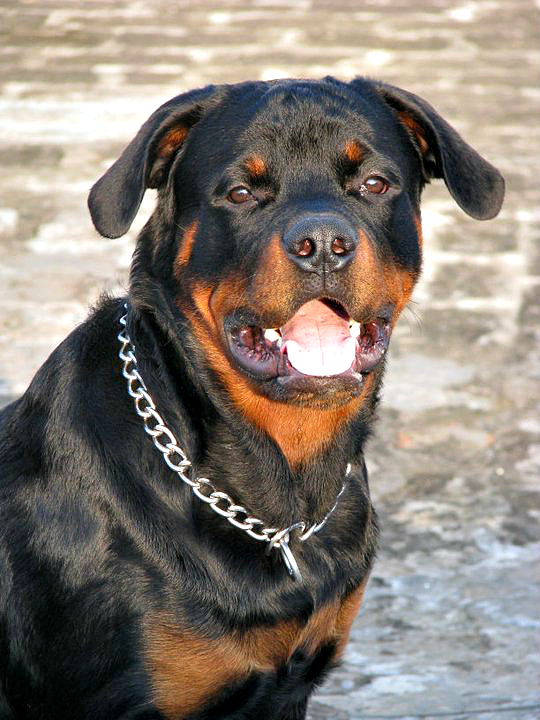
The black-and-mahogany coat is low-maintenance: a weekly pass with a rubber curry handles the moderate shedding, stepped up briefly during spring and fall. Baths as needed, nails every couple of weeks on a frame this heavy, teeth regularly, ears weekly. That is the entire program. The Rottweiler grooming budget is the one place this breed is cheap.
Is the Rottweiler Right for You?
The right Rottweiler owner is experienced or seriously committed, home enough to socialize and train continuously, physically able to manage a powerful dog, and prepared for the insurance and housing restrictions the breed unfairly attracts; check your local rules before you fall in love. Families do beautifully when the training clause is honored. Walk away if you want a dog to look tough, a first dog, or a yard ornament. If you love the guardian steadiness with a sleeker build, meet the Doberman Pinscher; for the working partnership with more coat and herding fire, the German Shepherd; for sheer calm mass, the Mastiff. Shelters carry wonderful Rottweilers surrendered by exactly the wrong owners the breed keeps attracting. Adopt from a rescue that temperament-tests, put in the work, and you get what the butchers of Rottweil trusted with their money: the most reliable partner in the working group, leaning on your legs.
Adopt a Rottweiler
Rottie rescues temperament-test honestly and match dogs to homes that can hold up their end. Shelters and rescues list new dogs every day.