Basset Hound Dog Breed Guide
French monks bred the Basset Hound low to the ground on purpose: “bas” means low, and a hunter on foot could follow a slow, methodical trailing dog whose nose never left the scent. The result carries the second-best nose in dogdom (only the Bloodhound outranks it) under sixty pounds of surprisingly dense dog on six-inch legs, wrapped in more skin than strictly necessary and topped with ears that drag through everything. It looks like a joke and is actually a precision instrument, one that happens to nap eighteen hours a day.
| Size | Medium |
|---|---|
| Weight | 40–65 lb |
| Lifespan | 10–12 years |
| AKC Group | Hound |
| Energy Level | Low |
| Good with Kids | Very Good |
| Shedding | Moderate |
| Trainability | Moderate |
Temperament & Personality
Bassets are pack hounds with a philosopher’s temperament: patient with children to a legendary degree, easy with other dogs (they genuinely prefer canine company), and gentle with everyone from toddlers to mail carriers. The affection is undemonstrative but total; a Basset shows love by relocating its considerable self to wherever you are and deploying a sigh that rearranges the furniture.
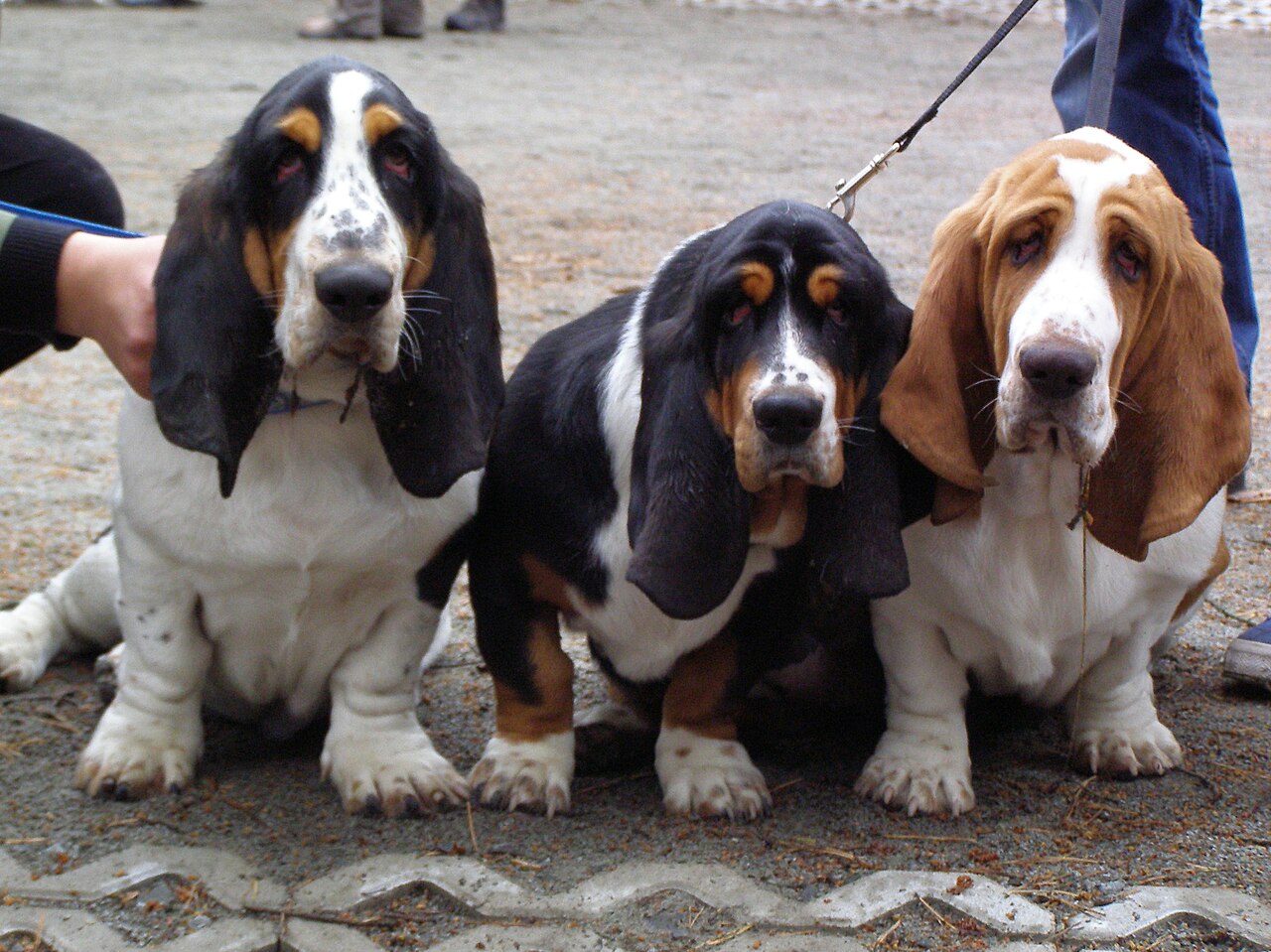
The honest hound clauses all apply. The nose outvotes you: a Basset on a scent goes deaf, slow-motion style, and follows the story wherever it leads, so fences and leashes are policy, not suggestions. The voice is a resonant, mournful bay that carries impressively and gets deployed when the household is judged understaffed. And the stubbornness is real: sixty pounds of low-slung dog that has decided the walk is over is an engineering problem, not a training one. Basset people find all of this hilarious, which is the correct qualification for owning one.
Health & Lifespan
Bassets run 10 to 12 years, and the shape that makes them iconic writes most of the health list. The long, low back is dwarfism architecture (the same chondrodystrophy as the Dachshund), carrying real disc-disease risk: keep the dog lean above all else, discourage furniture leaps, use ramps, and treat sudden yelping or rear-end wobbliness as a same-day vet visit. Weight is the whole battle; a fat Basset is an orthopedic slow-motion accident, and the breed gains on air and sad eyes.
The ears and skin come next: those magnificent dragging ears seal in moisture and need weekly cleaning and drying, and the facial folds and lip pockets appreciate regular wipes. Eyes carry glaucoma risk (the breed is predisposed, and a painful, squinting red eye is an emergency), and despite the low build, Bassets bloat, so the deep-chest briefing applies: calm meals, no exercise around eating, know the signs. Managed lean and dry-eared, the Basset is a durable, low-drama companion.
Training & Exercise
Train a Basset with food, humor, and modest ambitions: it is intelligent (the nose work proves it) but independent, bred to make trailing decisions without human input, and it evaluates every command against current scent conditions. Short, well-paid sessions produce solid house manners; recall remains theoretical wherever rabbits have ever existed. House-training runs slow by hound standards, so consistency and patience. What Bassets excel at, unsurprisingly, is nose work and tracking games, where the couch philosopher suddenly reveals the professional underneath.
Exercise is moderate but non-negotiable, precisely because of the weight battle: a good 45 to 60 minutes of daily walking at Basset pace, which includes mandatory reading of every vertical surface. Sniffing is the breed’s cardio and its enrichment in one, so let the walk be the dog’s newspaper. Skip the jogging and the stairs marathons; the chassis was not built for either. A lean, walked Basset stays mobile and merry deep into its senior years.
Grooming
The coat is easy: short, dense, moderately shedding, handled by a weekly rubber-curry session. Everything else droops and therefore needs a schedule. Ears cleaned and dried weekly without fail (and after every rainy walk, since they mop the ground), facial folds and lip pockets wiped, eyes checked, nails trimmed every couple of weeks on a heavy frame, teeth brushed. Bassets also produce a signature houndy oil in the coat; baths every month or so keep it conversational rather than atmospheric. Towels by the water bowl complete the equipment list; the drink-and-drip radius is generous.
Is the Basset Hound Right for You?
The Basset fits families with kids, laid-back households, and anyone who wants a gentle, comic, low-energy companion with more character per pound than nearly anything in dogdom. It is wrong for fastidious housekeepers (the drool, the oil, the hair), noise-sensitive neighbors (the bay), and anyone needing obedience or athletic partnership. If you love the droop with a working engine attached, meet the Bloodhound; the merry pocket edition, the Beagle. Bassets reach rescue when their stubbornness or their bay outlasted a household’s humor, and they rehome with total equanimity: a new couch is a couch. Adopt one, guard its waistline, clean its ears, and enjoy a decade of the best deadpan comedy in the animal kingdom.
Adopt a Basset Hound
Basset rescues know each hound’s stubbornness rating and bay volume honestly. Shelters and rescues list new dogs every day.