Siberian Husky vs Alaskan Malamute: How to Tell Them Apart
Half the “Huskies” in any shelter system are Malamutes, and a fair number of the “Malamutes” are Huskies. The two breeds get confused so routinely that rescues have volunteers whose whole job is sorting them out, and the mix-up matters, because one of these dogs weighs forty pounds more than the other and they were built for different work. A Siberian Husky is a marathon runner: light, fast, bred to pull a light sled far. An Alaskan Malamute is a powerlifter: heavy, deliberate, bred to haul freight slowly. Here is how to tell them apart, and more importantly, how to tell which one belongs with you.
| Siberian Husky | Alaskan Malamute | |
|---|---|---|
| Weight | 35–60 lb | 75–100 lb |
| Lifespan | 12–14 years | 10–14 years |
| Built For | Speed and endurance | Heavy hauling |
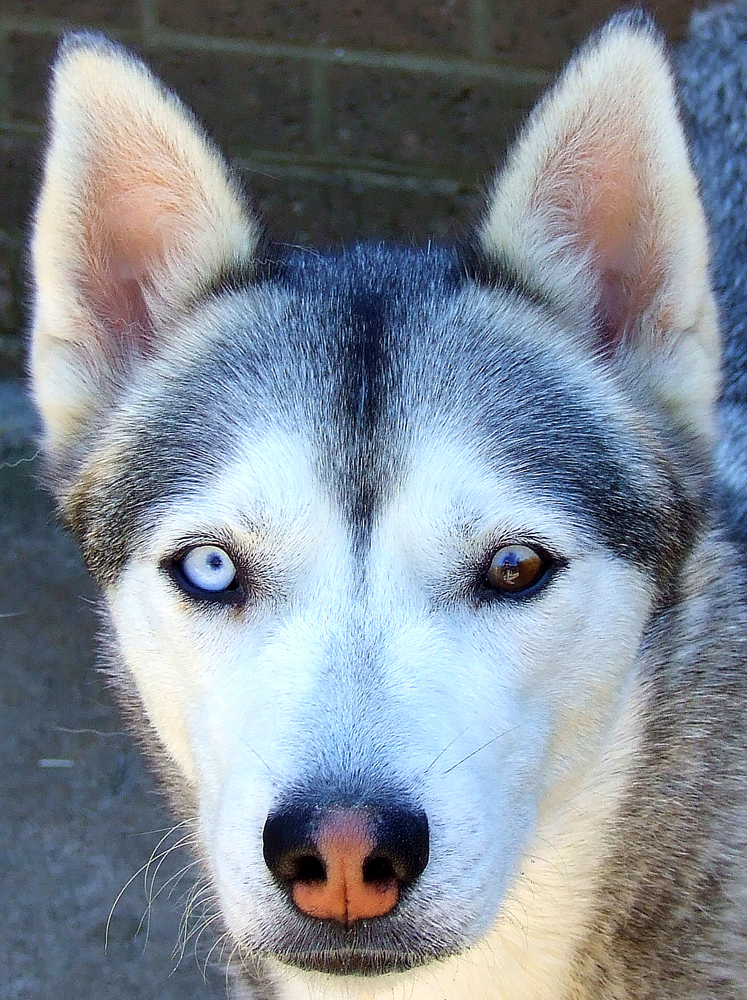
| Eyes | Brown, blue, or one of each | Always brown |
| Energy Level | Very High | High |
| Shedding | Heavy | Heavy |
| Trainability | Moderate | Moderate |
| Good with Kids | Very Good | Very Good |
Telling Them Apart at a Glance
Size settles most arguments: a full-grown Malamute is a genuinely big dog, 75 to 100 pounds of bone and coat, while a Husky next to one looks almost dainty at 35 to 60. If the dog is medium-sized and moving like it has somewhere to be, it is probably a Husky. Then check the eyes. Blue eyes, or one blue and one brown, mean Husky every time; the Malamute standard allows brown only. The tails differ too: a Malamute carries a plumed tail curled up over its back like a flag, while a Husky’s tail trails behind or lifts in a sickle, never a tight curl. Malamute ears sit wide on a broader head; Husky ears sit high and close together. Shelter staff mislabel them anyway, which is one more reason to meet the actual dog rather than shop by breed tag.
Temperament: Pack Clown vs Quiet Heavyweight
Huskies are the extroverts of the sled dog world. Bred to run in large teams, they generally love other dogs, greet burglars with enthusiasm, and treat life as a group activity. They are also the more theatrical of the two: the yodeling, the back-talk, the dramatic collapse when asked to do something boring. Malamutes run quieter and more dignified, deeply affectionate with their own people but more reserved with strangers and, crucially, more selective about other dogs. Same-sex scuffles are a known Malamute issue, and a hundred-pound dog with an opinion is a different management problem than a fifty-pound one. Neither breed guards anything; both were bred to work alongside strangers and will happily help carry your television to the thief’s van.
What They Share (the Hard Parts)
Everything difficult about one is difficult about both. The double coat blows out twice a year in quantities that defeat vacuum cleaners; brushing is a several-times-a-week commitment forever. Both dig, both howl, and both treat fences as puzzles rather than boundaries: six feet is the minimum, with wire buried at the base, because Huskies climb and Malamutes excavate. Off-leash reliability is not a training failure you can fix; it is the breed. A loose Husky is a dot on the horizon, and a loose Malamute is a dot that took longer to get there. Recall training still matters for emergencies (our recall guide explains why you build it anyway), but these breeds live on leashes and long lines near roads, full stop.
Exercise and Climate
The Husky needs more miles: this is a dog built to trot fifty of them, and an hour of hard exercise a day is the floor, not the ceiling. Canicross, bikejoring, and running partnerships are where Huskies shine. The Malamute needs less speed but real work; weight-pull sports, backpacking with a dog pack, and long steady hikes suit that freight-hauler body better than sprints, and hard running on a young Malamute’s joints does more harm than good. Both overheat easily. If your summers run hot, exercise happens at dawn, and air conditioning is not a luxury. Neither breed should be jogged in warm weather at all.
Which One Belongs in Your House?
Choose the Husky if you are an endurance athlete who wants a training partner, your household is social and multi-dog, and you can laugh at a dog that argues back; the full Siberian Husky guide covers the rest. Choose the Malamute if you want a calmer, heavier companion for hiking and cold-weather living, you have experience holding boundaries with a strong-willed dog, and no small pets share your home; details in the Alaskan Malamute guide. If the coat and the escape artistry both sound exhausting but the wolfish look appeals, meet a German Shepherd before you decide. And check rescue first: northern breeds flood shelters every year from owners who bought the blue eyes and met the breed afterward. Those dogs are not broken. They were just sold to the wrong houses.