When Do Puppies Stop Biting?
Most puppies grow out of the worst biting between six and eight months old, once adult teeth are in and consistent training has taken hold. The mouthing peaks around three to five months, during teething. A puppy still biting hard past eight months usually has a training gap, not a temperament problem.
Why Puppies Bite in the First Place
Puppies explore the world with their mouths the way toddlers do with their hands, and between three and five months they are also teething: 28 baby teeth fall out and 42 adult ones push through, and gums that busy want pressure on them. Add play, and you have a small animal that bites because it is bored, excited, uncomfortable, and delighted with you, sometimes all in the same minute. None of this is aggression. A play-biting puppy has loose, wiggly body language and comes back for more; a frightened one stiffens, freezes, and bites to make something stop. If what you are seeing looks like the second kind, skip the internet and talk to a trainer or your vet now, because fear is much easier to change at four months than at fourteen.
How to Speed the Timeline Up
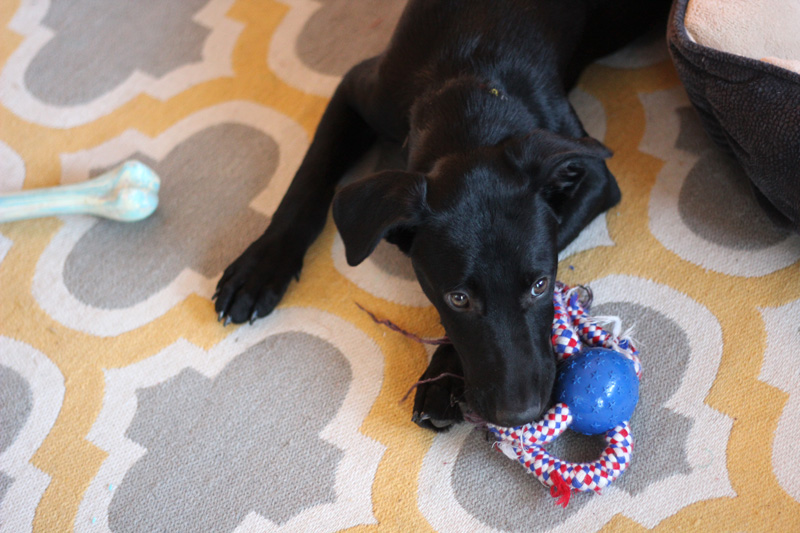
The goal is not to stop the mouth; it is to teach the mouth its manners. When teeth land on skin, mark the moment with a flat “ouch” or simply stand up and end the game for thirty seconds. The consequence puppies actually care about is that fun stops. Then redirect onto something legal: a rope toy, a frozen washcloth for teething gums, a food puzzle. Never play with your hands as the toy, and make sure everyone in the house follows the same rules, because a puppy that gets to bite one family member will keep testing all of them. Bite inhibition, the soft mouth a dog learns by four months, is the most valuable thing littermates ever teach, which is one reason puppies removed from the litter too early bite harder and longer. Our socialization guide explains how to fill that gap with well-run puppy classes.
Breed and Energy Matter
Some breeds simply come with more mouth. Herding dogs like the Border Collie and Australian Shepherd nip moving things by ancient design, retrievers like the Labrador carry and chew everything they love, and terriers grab first and reflect later. For these dogs the biting phase runs longer and the exercise requirement is not optional: an under-exercised adolescent with a genetically busy mouth becomes a land shark by dinnertime. A tired puppy with a full toy basket and a consistent family is a puppy whose biting phase ends on schedule.