Shih Tzu Dog Breed Guide
The Shih Tzu was bred inside the Forbidden City for one imperial purpose: to sit near an emperor and be magnificent. The name means “little lion,” the coat was styled to match, and the job description, professional companion, executive level, has not been revised in a thousand years. What the palace records undersell is the personality: under the flowing hair lives a sturdy, merry, slightly smug little dog that likes everyone, fears nothing worth fearing, and firmly believes your lap was zoned for its use.
| Size | Small |
|---|---|
| Weight | 9–16 lb |
| Lifespan | 10–18 years |
| AKC Group | Toy |
| Energy Level | Low |
| Good with Kids | Excellent |
| Shedding | Very Low |
| Trainability | Good |
Temperament & Personality
Among small companion breeds, the Shih Tzu is the diplomat. It likes children genuinely (and is sturdy enough to mean it), accepts other dogs and cats as court personnel, and greets strangers as new admirers rather than threats, which makes it one of the least yappy, least suspicious toys in dogdom. The affection is constant but not frantic: a Shih Tzu wants to be on you or near you, monitoring events from a cushion with the composure of an animal whose ancestors watched dynasties come and go.
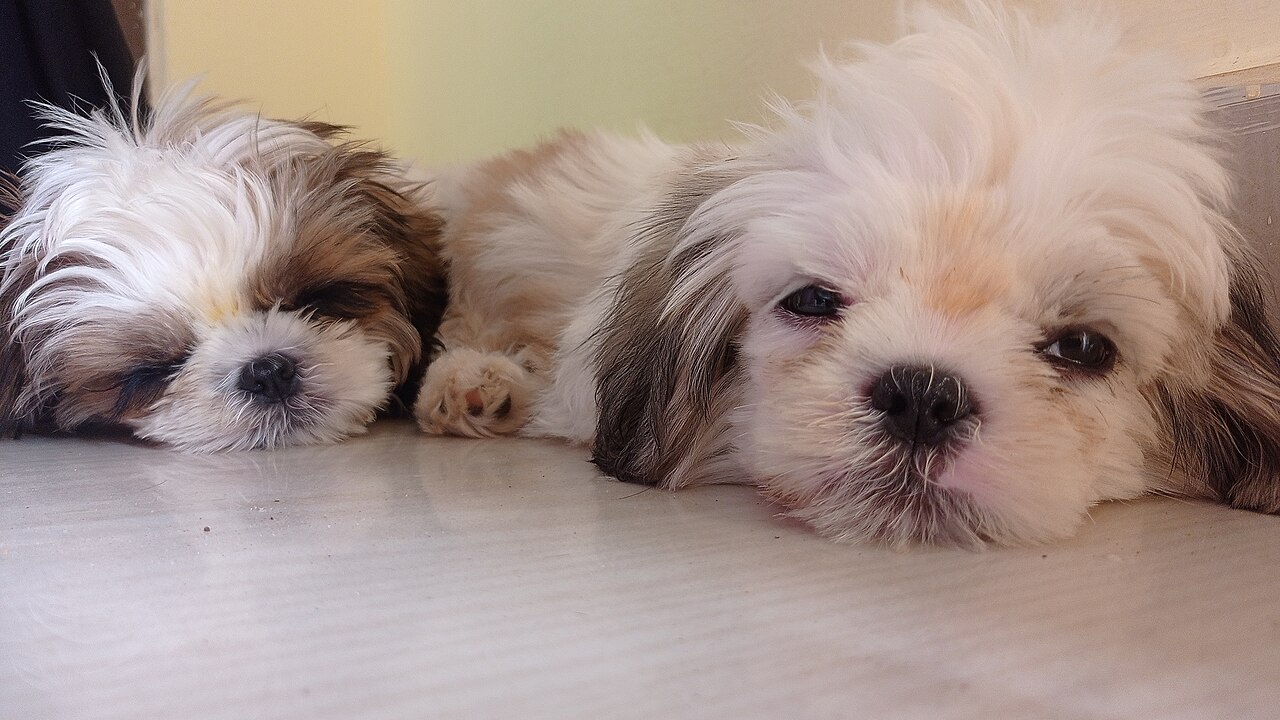
The stubborn streak is real and mostly funny: a Shih Tzu that has decided against something simply plants itself and outlasts you, a negotiation technique refined over centuries of never needing to compromise. They tolerate alone time better than most companion breeds but still prefer staff on premises, and the snoring, snorting soundtrack of the flat little face comes standard.
Health & Lifespan
Shih Tzus are long-haul companions, commonly living 10 to 18 years, with a health file shaped by the face and the eyes. The short muzzle brings mild-to-moderate brachycephalic issues: heat intolerance that moves summer walks to morning and evening, snoring, and in some dogs airway trouble worth a vet’s assessment. The large, prominent eyes lead the everyday watch list: they collect scratches and ulcers, dry eye is common, and any squint or pawing is a same-week appointment. Daily face care keeps hair and debris out of them.
Kneecaps luxate in some lines, hips occasionally trouble the breed despite its size, and some inherit renal dysplasia, a kidney condition breeders should discuss openly. The teeth need the full toy regimen (daily brushing, periodic cleanings) in that undershot little jaw. Keep the weight down and the face dry, and the second decade arrives with the lion still holding court.
Training & Exercise
Train a Shih Tzu with treats, patience, and realistic expectations about who is humoring whom. The breed is clever and learns readily when the reward economy is sound, but it was never bred to obey, only to charm, and it will charm its way around a command it finds unnecessary. House-training is the long campaign, months of schedule discipline at this size, and a “quiet” cue plus early socialization (easy, given the built-in friendliness) round out the syllabus. Harness, not collar, for the airway.
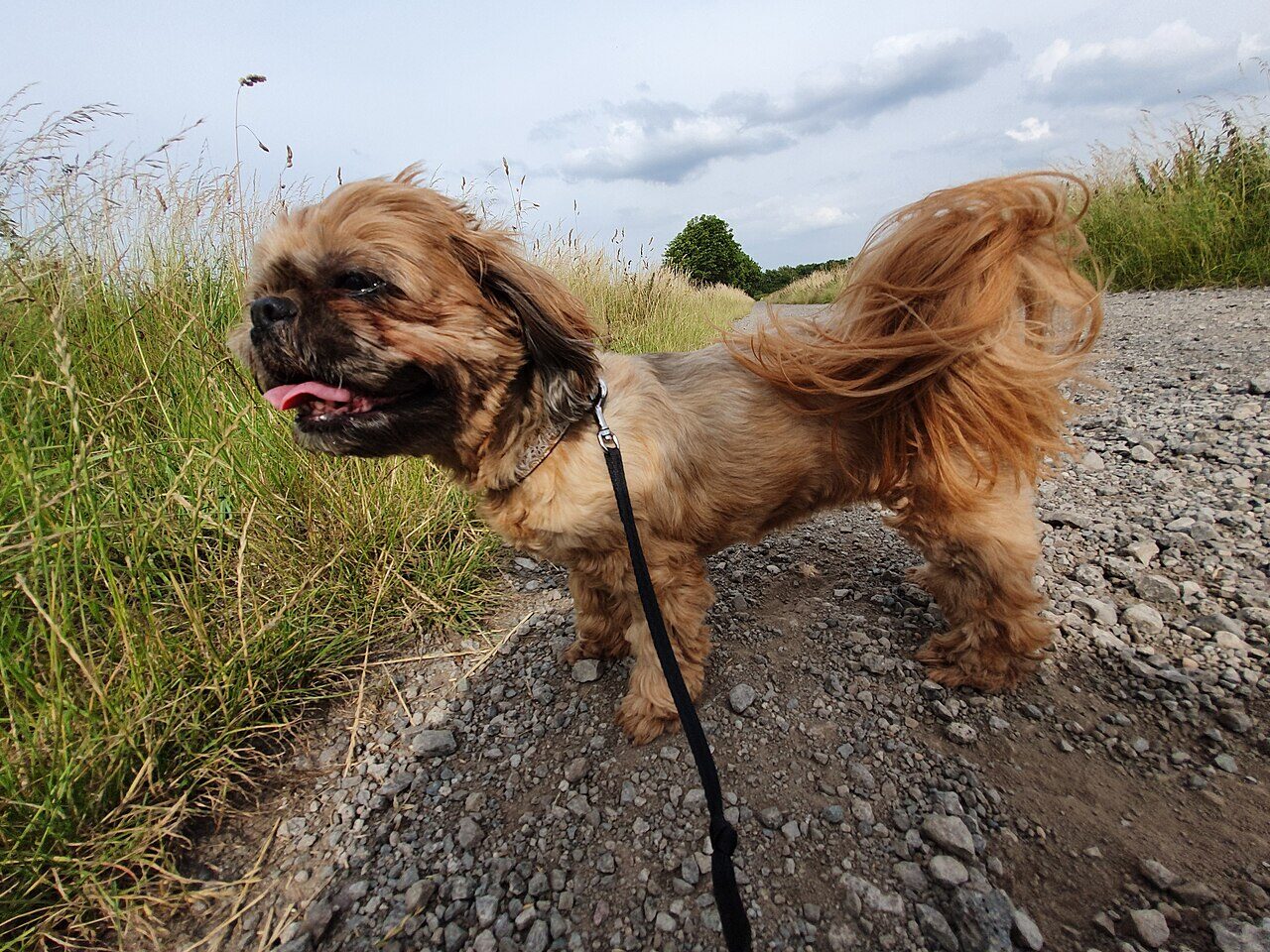
Exercise is palace-scale: two gentle walks and a play session, 20 to 40 minutes total, adjusted downward in heat without debate. Indoor games and puzzle feeders cover the brain, and many Shih Tzus surprise their owners with enthusiasm for trick training once the treats are right. This is one of the few breeds genuinely suited to less-active households, which is precisely why it has outlasted every empire that owned it.
Grooming
The imperial coat is the tax. Kept long, it is a daily commitment of combing to the skin plus topknots; kept in the sensible “puppy cut” that nearly all pet Shih Tzus wear, it needs a thorough brush-through every day or two and a professional trim every four to six weeks, forever. The non-negotiables are the face: wipe around the eyes daily, keep the hair out of them, and dry the beard after meals and drinks, or it ferments into something no emperor would tolerate. Weekly ears, regular nails, daily teeth. Skip the routine and the coat mats to the skin with remarkable speed; keep it and you own a small lion in show condition.
Is the Shih Tzu Right for You?
The Shih Tzu suits apartments, families with kids, seniors, and anyone whose ideal dog is a companionable presence rather than a project: it is arguably the best kid-friendly toy breed there is. It is wrong for athletes wanting a trail partner, hot climates without air conditioning, and anyone who will not fund the grooming. If you love the little-lion look with more spark, meet the Maltese; for the flat-faced comedy in a smoother coat, the Pug; for hypoallergenic-adjacent fluff with circus energy, the Bichon Frise. Shih Tzus arrive in rescue mostly as matted seniors whose owners’ circumstances changed, and they rehome with total equanimity; a dog bred for a thousand years of court transfers understands a change of administration. Yours will assess the new palace, locate the best cushion, and resume its reign.
Adopt a Shih Tzu
Somewhere near you, a small lion is between palaces. Shelters and rescues list new dogs every day.