Newfoundland Dog Breed Guide
Newfoundlands hauled fishing nets and pulled drowning sailors out of the North Atlantic, and the job left its mark: webbed feet, a coat that shrugs off ice water, and a rescue instinct so strong that some Newfs will “save” swimming family members whether they need it or not. Ashore, all that heroism folds itself into the sweetest temperament in the giant-dog world. The breed standard itself lists sweetness as the defining trait, and for once the paperwork is accurate.
| Size | Large |
|---|---|
| Weight | 100–150 lb |
| Lifespan | 9–10 years |
| AKC Group | Working |
| Energy Level | Moderate |
| Good with Kids | Excellent |
| Shedding | Heavy |
| Trainability | Very Good |
Temperament & Personality
Living with a Newfoundland is like living with a very large, very damp therapist. They read moods uncannily well, drift toward whoever is having the worst day, and apply 130 pounds of quiet sympathy until the situation improves. With children they are legendary; the “nanny dog” of Peter Pan was a Newfoundland, and the casting was based on real household behavior. They are patient past all reason, though a swinging Newf tail operates at toddler head height and clears low tables like a windscreen wiper.
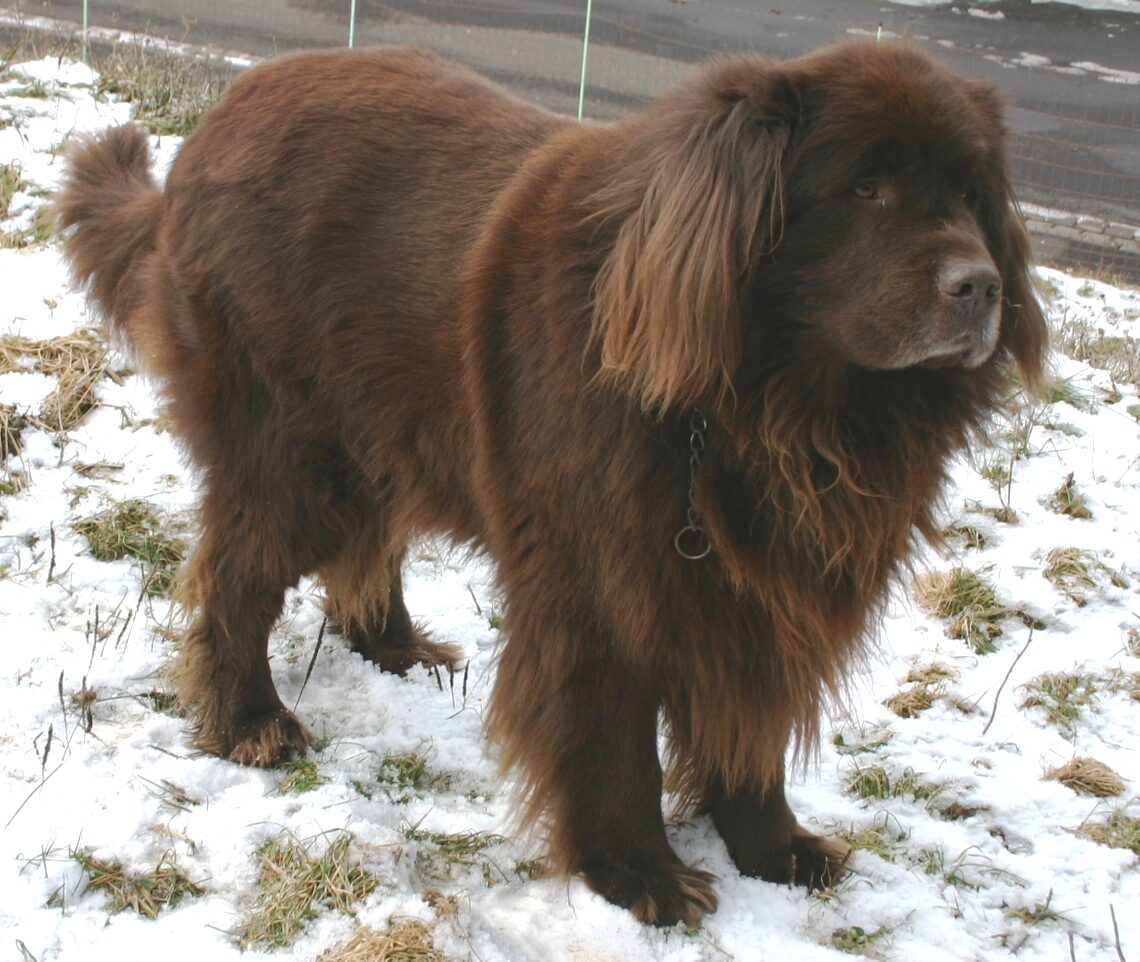
Newfs are gentle with strangers, easy with other animals, and miserable in isolation; this breed needs to live indoors with its people, enormous or not. The honest costs are fluids and fur. A Newfoundland drools with commitment, especially after drinking, and carries half the backyard indoors in that coat. Owners describe a lifestyle, not a pet: towels stationed by the water bowl, a mop with a permanent posting, and a dog leaning against someone at all times.
Health & Lifespan
The hard truth first: 9 to 10 years is the realistic span, and every Newfoundland owner wishes it were double. The breed’s particular weak point is the heart: subvalvular aortic stenosis (SAS) runs in some lines, which is why a cardiac clearance by a veterinary cardiologist, not just a stethoscope check, belongs on any puppy buyer’s demand list. Hips and elbows carry the usual giant-breed dysplasia risk, so ask for OFA or PennHIP scores too, and some Newfs inherit cystinuria, a kidney-stone condition with a simple DNA test.
Bloat rounds out the serious list, as with every deep-chested giant: know the signs (swollen belly, unproductive retching, sudden distress after meals) and feed two calm meals a day. Day to day, the jobs are keeping the weight down, drying the ears after every swim, and starting joint-friendly habits young. Heat is the other enemy; a Newfoundland in a warm climate lives its summers at dawn, at dusk, and near the air conditioner.
Training & Exercise
Newfs train willingly, on Newfoundland time. Ask for a sit and you get a thoughtful pause, a slow rearrangement of real estate, and then a sit, and impatience gains you nothing. Reward-based methods, short cheerful sessions, and early work on leash manners are essential, because a grown Newf that pulls is a sleigh ride you did not book. Socialize generously as a puppy so the adult’s calm is confidence rather than caution.
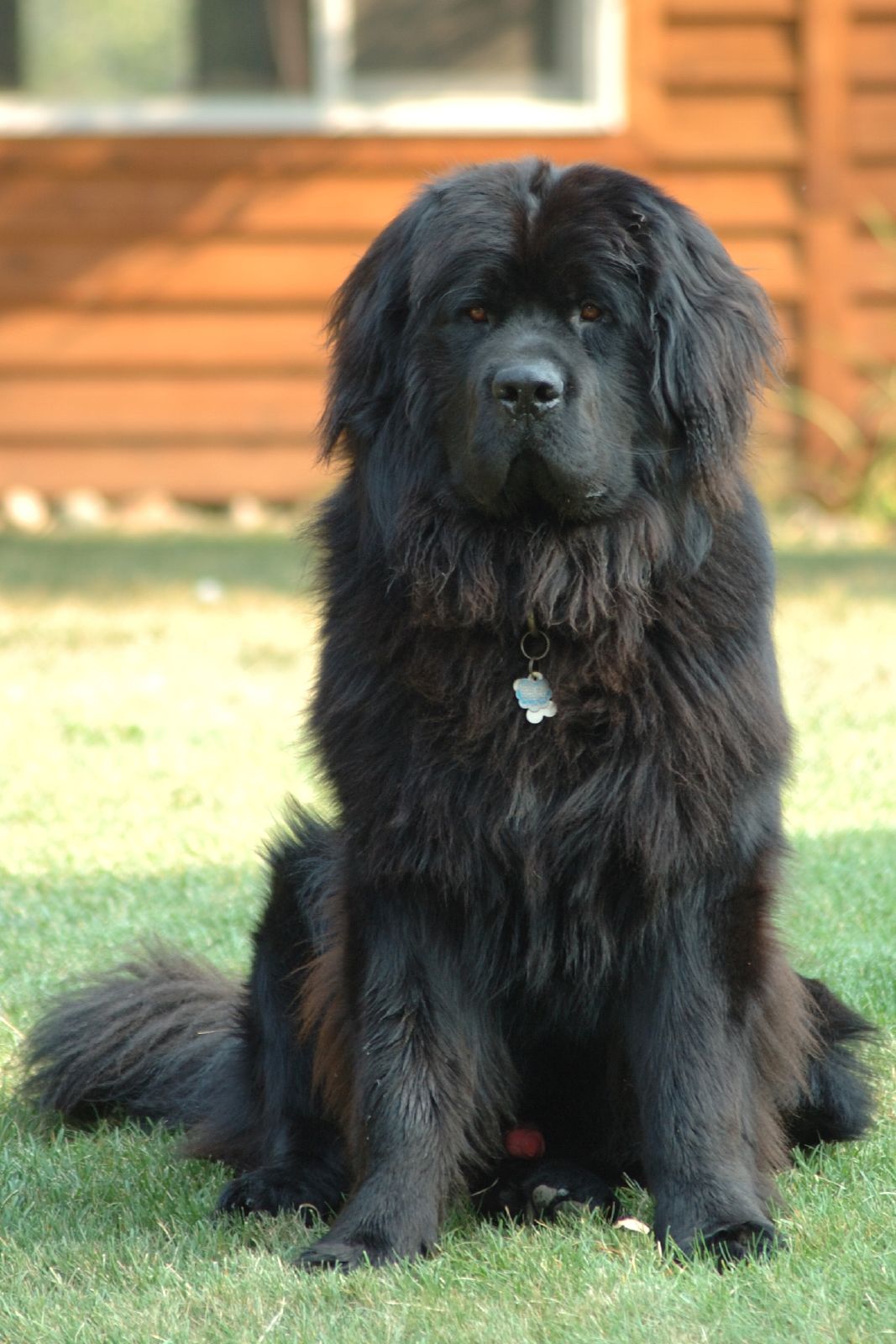
Exercise is moderate and low-impact: 30 to 60 minutes of walking a day, plus whatever swimming you can arrange, because water is where this breed becomes an athlete. A Newf that plods on land turns into a tugboat the moment it wades in, and organized water work or draft (cart-pulling) classes give the working brain a purpose. Protect puppy joints for the first 18 months: no jogging, no stairs sprints, lots of naps. The puppy grows a hundred pounds in a year; patience now is orthopedics later.
Grooming
The double coat is magnificent and relentless. Brush it thoroughly two or three times a week, daily during the twice-yearly blowouts, working an undercoat rake down to the skin, especially behind the ears, in the armpits, and across the britches where mats form quietly. Many owners book a professional groom every couple of months just for the bath-and-blowout logistics; drying a soaked Newfoundland at home is an afternoon project. Never shave the coat; it insulates against heat as well as cold. Ears get checked weekly (always after swimming), nails trimmed, teeth brushed, and drool wiped on a schedule best described as continuous.
Is the Newfoundland Right for You?
The right home has space, patience, a tolerance for hair and slobber that borders on sainthood, and ideally water somewhere nearby. Families with kids get the gentlest giant there is; calm single owners get a devoted shadow. Walk away if you need a tidy house, live in a hot climate without serious air conditioning, or cannot absorb giant-breed vet costs. If you love the temperament but want longer walks and less drool, meet the Bernese Mountain Dog; if it is the water-dog heart you are after in a more manageable size, the Labrador Retriever is the classic answer. Newfs do appear in rescue, often when a family underestimated the sheer logistics, and an adult Newf settles into a new home with the same sweetness it was born with. It will find your saddest family member by dinnertime.
Adopt a Newfoundland
Newfoundland rescues are careful matchmakers, and adult Newfs arrive already fluent in gentleness. Shelters and rescues list new dogs every day.