Boston Terrier Dog Breed Guide
The Boston Terrier is America’s first purpose-built companion breed, engineered in 1870s Boston and nicknamed “the American Gentleman” for the tuxedo markings and the manners to match. The nickname holds up. This is a polite, portable, people-oriented little dog with just enough clown in it to keep a household entertained, and fewer of the medical asterisks that trail its flat-faced cousins. If the toy-companion category had a sensible-default option, the Boston would be it.
| Size | Small |
|---|---|
| Weight | 12–25 lb |
| Lifespan | 11–13 years |
| AKC Group | Non-Sporting |
| Energy Level | Moderate |
| Good with Kids | Excellent |
| Shedding | Low |
| Trainability | Very Good |
Temperament & Personality
Bostons live tuned to their people. Yours will read your face like a weather report, celebrate your arrivals with a full-body wiggle, and park itself against your leg during television with a sigh of accomplishment. They are gentle with kids, genuinely good with strangers and other dogs, and playful in short, hilarious bursts, a lap around the living room, a spirited round of fetch, and back to supervising from the sofa.
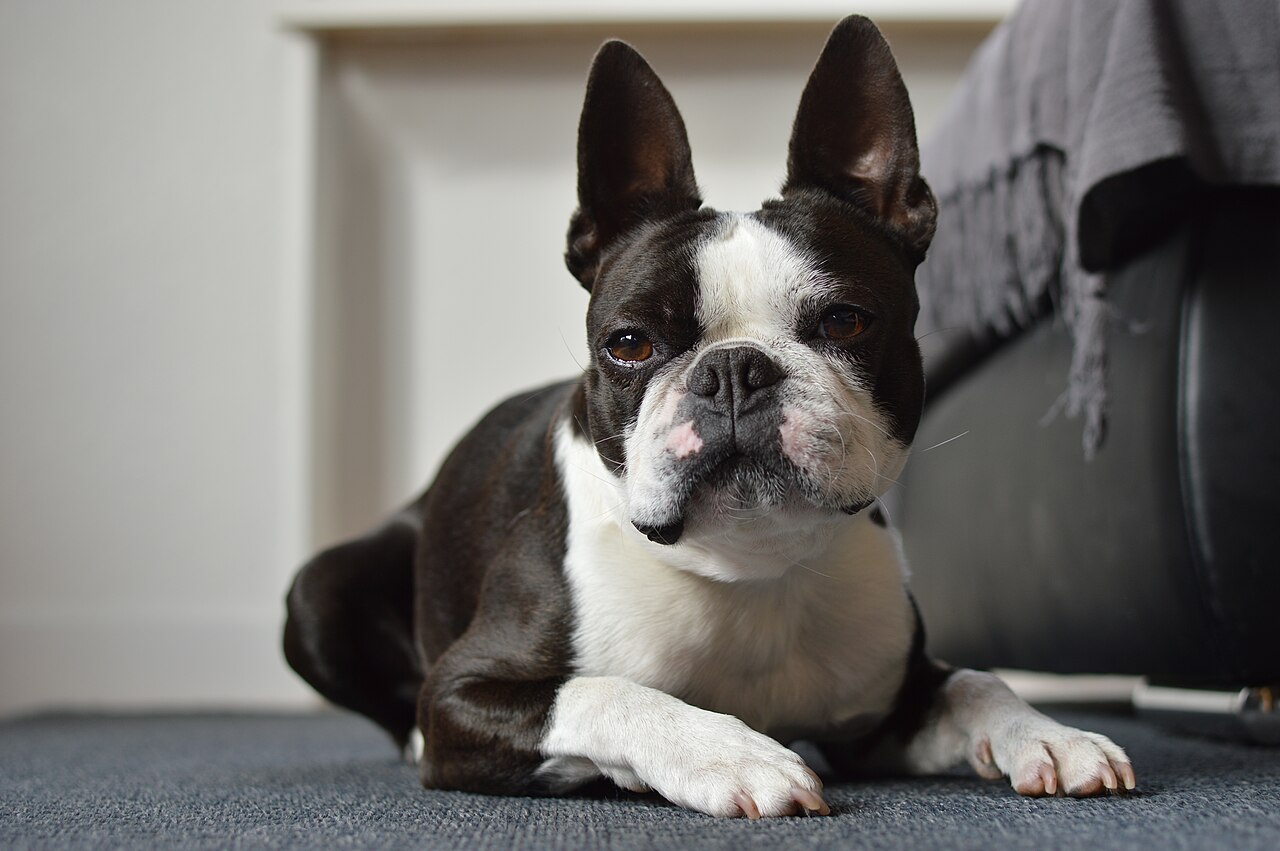
The honest quirks are respiratory and gastrointestinal. Bostons snort, snore lightly, and, thanks to air gulped through that short muzzle, produce a gas output entirely out of proportion to their size; every Boston household has a story and a candle. They can be stubborn in small, negotiable ways, and some males posture at the dog park. But compared with most breeds in this guide series, the Boston’s downside column is charmingly short.
Health & Lifespan
Bostons carry the flat-face package in its mildest common form, but it is still the package: some snore their way to old age untroubled, others need airway attention, and all of them handle heat poorly. Summer walks happen early and late, and a Boston that starts loud breathing gets shade, water, and a ride home. The eyes are the breed’s most vulnerable hardware: large, prominent, and leading the face into everything, they collect scratches, ulcers, and (in some lines) juvenile cataracts. Any squint or pawing at an eye is a this-week vet visit, and breeders should show eye clearances on both parents along with a BAER hearing test, since deafness occurs in predominantly white puppies.
Some Bostons carry hemivertebrae (malformed spinal bones) as a legacy of the corkscrew-tail genetics; most never notice, but rear-leg wobbliness deserves imaging. Kneecaps can luxate, as in most small breeds. With measured meals, eye vigilance, and sensible summers, 11 to 13 good years is the standard result, and plenty of Bostons cruise past it.
Training & Exercise
This is one of the easiest companion breeds to train. Bostons are bright, food-motivated, eager to please, and forgiving of beginner mistakes, which makes them a superb first dog. Short upbeat sessions produce a solid repertoire fast, house-training proceeds at a reasonable pace by small-dog standards, and socialization is a pleasure with a dog this congenitally friendly. Use a harness rather than a collar for the airway, and teach a calm greeting early, because the full-body wiggle escalates to airborne joy with encouragement.
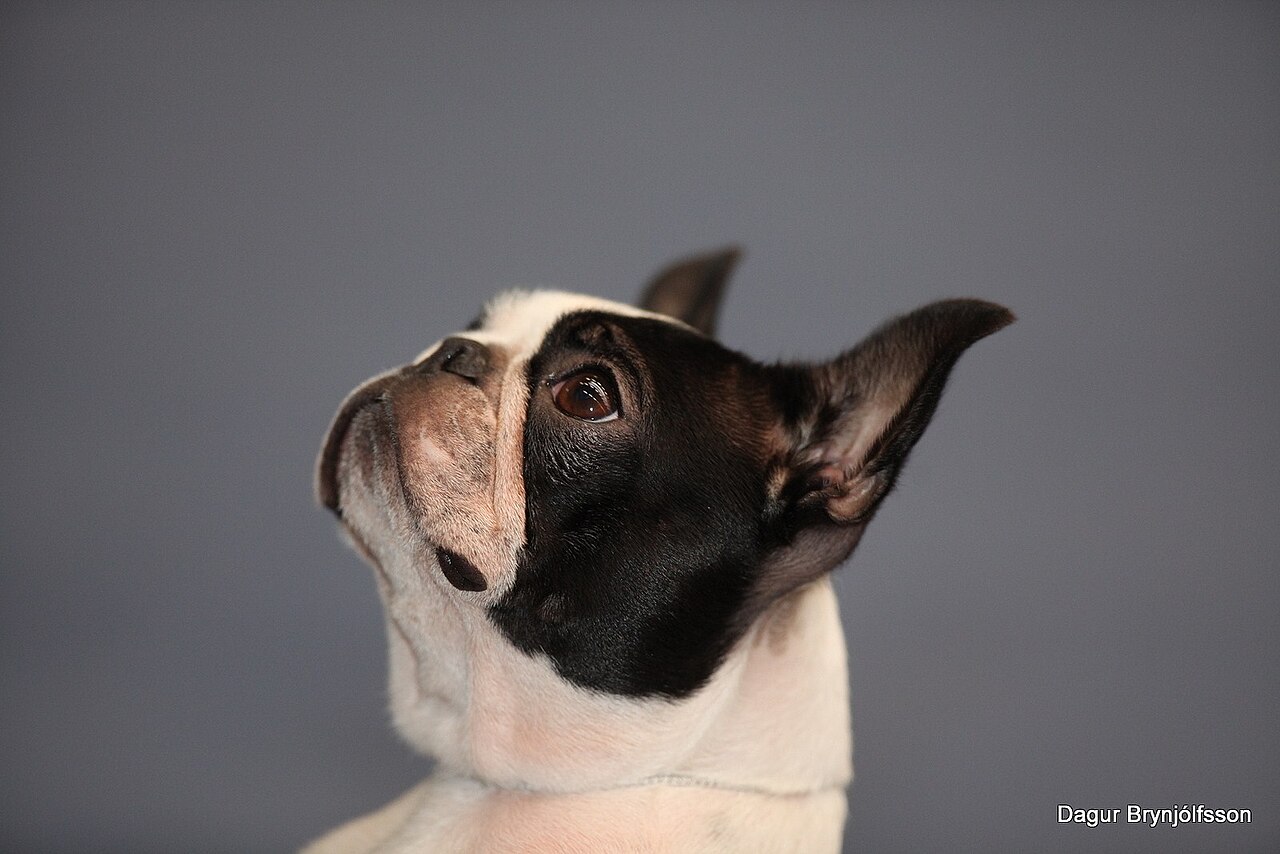
Exercise runs 45 to 60 minutes a day in Boston-sized installments: a couple of brisk walks, a fetch session (many Bostons are ball-obsessed), and indoor play. They make agreeable short-distance jogging partners in cool weather and enthusiastic agility competitors at the local-fun level. Heat rules apply always, and swimming is a life-vest activity; the build is front-heavy like its cousins the French Bulldog and Pug.
Grooming
Grooming a Boston is a weekly ten-minute appointment: a once-over with a rubber mitt for the fine, low-shed coat, a wipe of the small face folds, and a look at the eyes and ears. Baths monthly or when the dog earns one. Nails every couple of weeks, teeth as close to daily as you can manage. That is the entire program; the tuxedo, conveniently, is self-pressing.
Is the Boston Terrier Right for You?
The Boston is close to a universal recommendation in the small-companion class: apartments, families with kids, first-time owners, seniors, city or suburb. The disqualifiers are few and specific: hot climates without air conditioning, marathon ambitions, and households gone all day, because this dog exists to be with you. If you want more wrinkle and even more couch, meet the French Bulldog; more comedy and more shedding, the Pug. Bostons appear in rescue less than trendier flat-faced breeds but they appear, and an adopted adult arrives with the gentleman’s manners already installed. It will find your rhythm within a week and improve it within two.
Adopt a Boston Terrier
Somewhere near you, a small dog in a permanent tuxedo is waiting for an occasion. Shelters and rescues list new dogs every day.