Cavalier King Charles Spaniel Dog Breed Guide
King Charles II was accused of neglecting affairs of state to play with his spaniels, and the breed that carries his name has been perfecting that exact arrangement ever since. The Cavalier King Charles Spaniel may be the best pure companion dog ever engineered: gentle with everyone, portable, beautiful, and devoted with a completeness that rearranges households. It also carries a heartbreak in its chest that every honest guide must lead with, because loving a Cavalier well means knowing it.
| Size | Small |
|---|---|
| Weight | 12–18 lb |
| Lifespan | 12–15 years |
| AKC Group | Toy |
| Energy Level | Moderate |
| Good with Kids | Excellent |
| Shedding | Moderate |
| Trainability | Very Good |
Temperament & Personality
Cavaliers love indiscriminately and mean it: family, visitors, children, other dogs, the neighbor’s cat, the vet mid-injection. The breed carries essentially none of the suspicion, snappishness, or possessiveness that complicates other toys, which makes it the closest thing dogdom offers to a guaranteed-sweet companion. With children Cavaliers are patient and genuinely playful; with seniors they are contented lap furniture; with everyone they maintain eye contact that has been melting humans since the Restoration.

The costs are companionship-shaped: a Cavalier alone all day is a small tragedy in progress, and separation distress is the breed’s main behavioral complaint. There is also still a spaniel in there; Cavaliers chase birds, squirrels, and butterflies with ancestral commitment and famously poor traffic judgment, which makes leashes and fences permanent equipment despite the lapdog job title.
Health & Lifespan
Here is the paragraph that separates informed Cavalier owners from heartbroken ones: mitral valve disease is nearly universal in this breed. Studies find heart murmurs in roughly half of Cavaliers by age five and in almost all of them by ten, and MVD is the breed’s leading cause of death. This is not a reason to avoid the breed; modern cardiac medicine manages MVD well for years, and many Cavaliers live full 12-to-15-year lives. It is a reason to buy only from breeders following the MVD protocol (parents cardiac-clear past age 2.5, grandparents past 5), to budget for annual heart checks from age five, and to know that a cough or exercise intolerance in a middle-aged Cavalier goes to a cardiologist, not a wait-and-see list.
The breed’s second inherited concern is syringomyelia, a neurological condition where the skull is too small for the brain, causing scratching at the neck and shoulder, yelping without cause, and head sensitivity; serious breeders MRI-screen breeding stock and discuss it unprompted. Add the usual toy items (kneecaps, ears under those feathered flaps, weekly checks, daily teeth) and the eyes (annual clearances in breeding stock), and the message is consistent: with Cavaliers, breeder health-testing is not a bonus feature, it is the entire game.
Training & Exercise
Cavaliers train as sweetly as they do everything else: eager, food-motivated, soft-tempered, and genuinely happy to comply once they understand the request. Reward-based methods produce lovely manners fast, house-training runs average for a small breed, and the important early installations are calm alone-time (the breed’s one real vulnerability) and a solid leash habit, since the spaniel chase reflex never fully retires. Harshness is never needed and visibly wounds them; a disappointed tone is already heavy artillery.
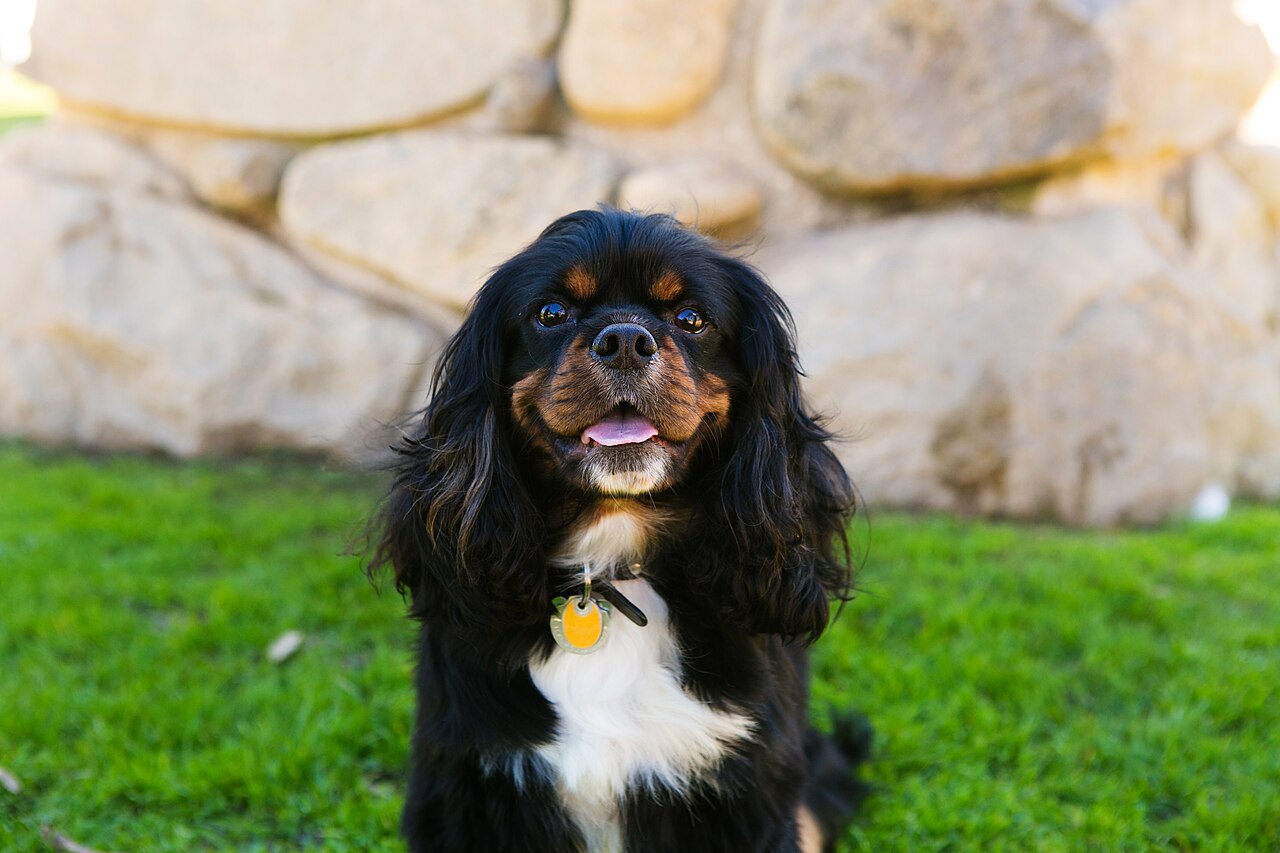
Exercise is adaptable, which is the breed’s quiet superpower: a Cavalier will hike five miles with an active family on Saturday and match a quiet senior’s two short strolls on Monday with equal contentment. Budget 30 to 60 minutes daily, watch the heat under that silky coat, and add gentle play and sniffy exploration for the spaniel brain. Few breeds scale their energy to their household so gracefully.
Grooming
The silky, feathered coat needs less than it advertises: a thorough brush-through two or three times a week, with attention to the ear feathering, armpits, and britches where tangles form, plus a bath every few weeks. No clipping is traditional (the coat stays natural), though many pet owners tidy the feet and sanitary areas. The non-negotiables are the ears, checked and dried weekly under all that feathering, daily tooth brushing in a toy-sized mouth, tear-stain wipes on lighter faces, and regular nails. Twenty gentle minutes a week, which the Cavalier will receive as a spa appointment and additional proof of your excellent character.
Is the Cavalier King Charles Spaniel Right for You?
The Cavalier fits nearly everyone the breed’s health story does not disqualify: families with kids of any age, seniors, apartments, first-timers, and multi-pet households all thrive with this dog. The real requirements are company (someone home, most of the time) and clear-eyed acceptance of the cardiac paragraph, including its financial planning. If the health risks weigh too heavily, the Shih Tzu and Bichon Frise offer companion excellence with sturdier actuarial tables, and the Cocker Spaniel scales the spaniel sweetness up a size. Cavaliers reach rescue mostly through owner circumstance, never through fault of their own, and an adopted adult transfers its devotion within days. Whatever heart this breed has, and however long it runs, every beat of it will be pointed at you.
Adopt a Cavalier King Charles Spaniel
Cavalier rescues share full cardiac histories and match with care. Shelters and rescues list new dogs every day.