French Bulldog Dog Breed Guide
The French Bulldog recently became the most popular dog in America, and it earned the spot the honest way: by being a hilarious, portable, endlessly affectionate companion that genuinely prefers your couch to a hiking trail. What the popularity boom does not advertise is the medical fine print that comes with that flat face, or how many Frenchies land in rescue when the vet bills arrive. Both halves of the story belong in the same guide.
| Size | Small |
|---|---|
| Weight | 20–28 lb |
| Lifespan | 10–12 years |
| AKC Group | Non-Sporting |
| Energy Level | Low |
| Good with Kids | Excellent |
| Shedding | Moderate |
| Trainability | Good |
Temperament & Personality
A Frenchie runs on attention the way other dogs run on kibble. It will follow you to the kitchen, claim the warm spot you just left, and stare at you with those wide-set eyes until you explain yourself. The breed is a born comedian: the head tilts, the bat ears semaphore every emotion, and the play style is pure slapstick. They are also quieter than most small dogs. A Frenchie rarely barks much, though it produces an entire orchestra of snorts, grumbles, and snores that owners come to find weirdly soothing.

With children they are patient and sturdy enough to enjoy the chaos, and most get along fine with other pets, though some males posture with strange dogs. The dependency cuts both ways: this breed was invented to sit on laps, and it does not accept a workday alone with grace. Expect stubbornness too. A Frenchie understands your request perfectly; it is simply weighing whether the compensation is adequate.
Health & Lifespan
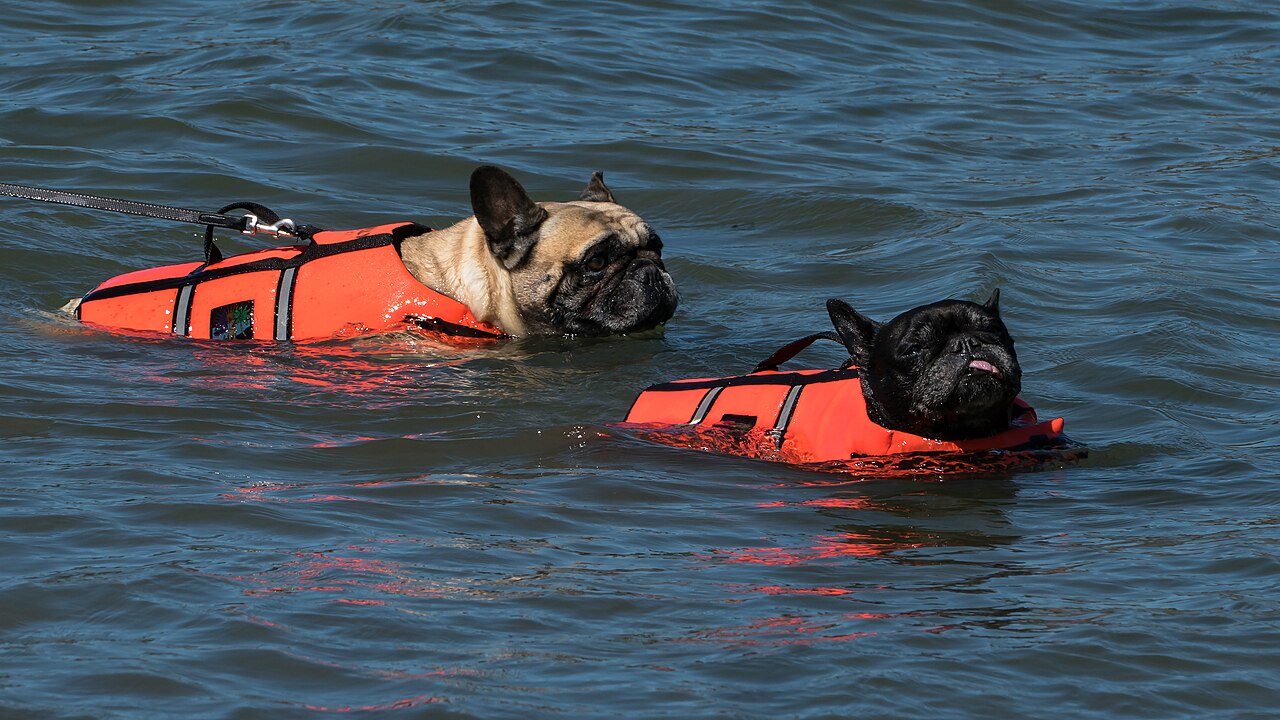
This is the section every prospective Frenchie owner must read twice. That adorable flat face comes with brachycephalic obstructive airway syndrome, which means many Frenchies snore at rest, struggle in heat, and some need airway surgery just to breathe comfortably. Heat is genuinely dangerous: a warm summer walk that a Beagle would shrug off can put a Frenchie in the emergency clinic. They also cannot swim; the heavy front end sinks, so pools and lakes require a life vest and supervision, no exceptions. Add a corkscrew-prone spine (IVDD), allergy-prone skin, and ears and facial folds that need regular cleaning, and you have one of the most expensive breeds in veterinary medicine. Pet insurance is not optional advice here; it is the difference between a hard month and an impossible one.
Buying a puppy makes breeder choice unusually important: ask to hear both parents breathe at rest (silence is what you want), and ask for spine x-rays and health testing paperwork, not reassurances. Adopting? Frenchie rescues are refreshingly blunt about each dog’s medical file, and an adult with known health status can honestly be a safer bet than a puppy of unknown breeding. With good care and a lean body weight, 10 to 12 good years is realistic.
Training & Exercise
Frenchies are smart enough to learn anything and independent enough to ask why. Keep training sessions short, funny, and paid in treats, and you will get a reliably mannered companion; turn it into a drill and the Frenchie will simply sit down and look at you. House-training tends to be the slowest project, so budget patience and a consistent schedule. Socialization matters as much as for any breed, and it is easy here, because the average Frenchie assumes everyone came to see him anyway.
Exercise needs are modest and must stay that way: two or three short walks a day, around 30 to 45 minutes total, plus indoor play. Schedule walks for cool mornings and evenings in summer, watch for loud breathing or a lolling blue-tinged tongue, and carry water. This is one of the few breeds where the danger is over-exercising rather than under-exercising, which makes the Frenchie a dream for apartment dwellers and a poor match for marathon trainers.
Grooming
The coat itself is easy: short, fine, moderately shedding, handled by a weekly rubber-brush session and an occasional bath. The real grooming work on a Frenchie is everything that is not fur. Facial folds need wiping a few times a week and thorough drying, or they brew infections in the creases. The bat ears collect debris and want a weekly look. The tail pocket, a small fold hiding under that stub of a tail, needs occasional cleaning that nobody warns first-time owners about. Add nail trims and tooth brushing, and the whole routine still fits in fifteen minutes, which the Frenchie will treat as a spa visit if you narrate it properly.
Is the French Bulldog Right for You?
A Frenchie fits apartments, retirees, families with kids, and anyone whose idea of quality time is a walk, a snack, and a shared couch. It is the wrong dog for runners, for hot climates without air conditioning, for homes empty all day, and for budgets with no room for veterinary surprises. If you love the squashed-face charm but want a slightly hardier athlete, look at the Boston Terrier; if it is the mellow companionship you are after, the Pug plays a similar role with its own fine print. And given that a well-bred Frenchie puppy costs thousands while rescues quietly fill with surrendered ones, meeting an adult through a breed rescue is both the budget move and the kind one. The dog will not care how it found you. It will simply annex your lap and consider the matter settled.
ADOPT THIS BREED
Find a French Bulldog to Adopt
Somewhere near you, a Frenchie is snoring in a shelter kennel, dreaming of a couch with your name on it. Shelters and rescues list new dogs every day.